Address
1207 Delaware Ave #1906
Wilmington DE 19806, USA

Breast Cancer Diagnosis with Analog Artificial Neural Network: A Survey of Architectures, Implementations, and Challenges

Original Research Article
PDF
Breast Cancer Diagnosis with Analog Artificial Neural Network: A Survey of Architectures, Implementations, and Challenges
Abstract
The primary driver of female death remains breast cancer, highlighting the need for effective screening and accessible diagnostic tools. Digital hardware approaches have demonstrated strong performance but are constrained by high computational and energy demands, limiting their use in real-time portable devices. Analog Artificial Neural Networks (AANNs) offer advantages in speed, power efficiency, and compact hardware, though they remain experimental. This survey reviews AANNs for breast cancer diagnosis, applying a structured methodology to identify and compare studies across architectures, hardware technologies, accuracy, power consumption, and clinical applicability. A framework is proposed to organize the field and examine the dataset. The survey highlights sensitivity to environmental factors as a design challenge, while moderating clinical claims by discussing pathways and deployment barriers. By synthesizing current research, this survey motivates the development of clinically validated solutions that, if attained, could advance medical informatics by enabling the integration of analog models into clinical practice.
Keywords
Breast cancer diagnosis; Analog artificial neural network; Multilayer perceptron; Complementary metal-oxide semiconductor; Very large-scale integration
Introduction
Breast cancer significantly contributes to high mortality worldwide. As reported by Macmillan Cancer Support in London [1], it is the most frequent cancer among women and remains their primary cause of death. Globally, one in eight women is estimated to develop the disease during their lifetime, underscoring the urgent need for effective screening and accurate diagnosis to distinguish benign from malignant tumors and improve survival outcomes. Conventional diagnostic methods such as mammography, ultrasound, MRI, and biopsy have advanced early detection. Yet, they face persistent limitations, including radiation exposure, reduced sensitivity in dense breast tissue, high costs, and invasiveness. These challenges motivate the exploration of computational approaches that can enhance diagnostic accuracy, efficiency, cost, and accessibility.
Artificial Neural Networks (ANNs) have increasingly demonstrated effectiveness in breast cancer diagnosis. They have advanced across diverse fields, including economics, ecology, robotics, biology, and medicine [2], proving useful for classification, prediction, optimization, pattern recognition, and associative memory problems [3-5]. Inspired by the human brain's function [6,7], ANNs are information-processing systems designed to learn from data. While digital implementations have dominated medical applications, they are constrained by high computational demands, energy consumption, and hardware footprint. AANNs offer enhanced processing speed, lower power consumption, and cost efficiency, making them attractive for medical contexts where real-time, portable, and resource-efficient solutions are essential. Implementing AANNs requires hardware realization, often through Complementary Metal-Oxide Semiconductor (CMOS) Very Large-Scale Integration (VLSI) designs, which integrate parallel elements onto a single chip [8,9]. This paves the way for Analog VLSI (AVLSI) implementations with multipliers, nonlinear functions, and derivatives [10]. Multilayer Perceptron (MLP) architectures employing backpropagation [11,12] have been central to these efforts. Recent AANNs are appealing due to their massive computational parallelism and analog processing strength [13], their ability to exploit silicon’s full potential [14], and their capacity to imitate biological functions [15-17]. Illustrative cases include Van’s et al. [18] low-power intracardiac electrocardiogram classifier and Houshmand’s et al. [19] handwriting recognition system. Several researchers emphasize AVLSI’s benefits [13,20,21], particularly low power consumption.
Despite these advantages, analog implementations remain experimental and face critical challenges, including sensitivity to environmental conditions, device mismatch, scalability, and reproducibility. Ethical considerations in screening deployment also require attention. Furthermore, the literature on analog neural networks for breast cancer diagnosis remains fragmented. Existing studies often focus on specific hardware designs or algorithmic implementations without providing a broader synthesis of the field. As a result, researchers entering this domain lack a structured overview of existing approaches, hardware technologies, datasets, and practical deployment challenges. This survey aims to address this gap by providing a comprehensive, structured analysis of AANN-based approaches to breast cancer diagnosis. Specifically, the contributions of this survey are summarized as follows: A systematic review of research on AANNs applied to breast cancer diagnosis; A taxonomy framework organizing existing work; A comparative quantitative analysis of hardware implementations; A review of datasets used in breast cancer diagnostic research; A critical discussion of technological limitations, including noise, device mismatch, and fabrication challenges; and An examination of clinical validation requirements and regulatory considerations for deploying AI-based diagnostic hardware.
The subsequent sections of this paper are structured as follows. Section 2 presents the survey methodology used to collect and analyze relevant literature. Section 3 reviews the clinical and biological background of breast cancer diagnosis and introduces machine learning techniques used in diagnostic systems. Section 4 presents the proposed taxonomy of AANNs implementations. Section 5 provides a comparative analysis of hardware-based diagnostic systems. Section 6 discusses commonly used breast cancer datasets. Section 7 examines technical challenges associated with analog neural hardware. Section 8 discusses clinical deployment considerations and regulatory pathways. Finally, Section 9 outlines future research directions and concluding remarks.
Survey Methodology
A systematic approach was adopted to ensure that this survey provides a comprehensive and objective synthesis of research on AANNs for breast cancer diagnosis. The methodology comprised four key stages: literature identification, selection, categorization, and synthesis. The literature for this survey was identified through systematic searches in major scientific databases, including PubMed, IEEE Xplore, Scopus, SpringerLink, Crossref, ScienceDirect, ResearchGate, and Google Scholar. These databases were selected because they collectively cover the primary publication venues for research in biomedical engineering, artificial intelligence, and electronic circuit design. Search queries were constructed using combinations of keywords related to analog neural networks, neuromorphic computing, hardware neural networks, breast cancer diagnosis, medical artificial intelligence, and CMOS VLSI implementations. Keywords such as “analog artificial neural network,” “breast cancer diagnosis,” “AVLSI neural networks,” “memristor-based ANN,” “neuromorphic hardware,” “multilayer perceptron hardware,” “hardware neural network,” and “medical AI hardware” were used in various combinations. The search was restricted to publications written in English and published between 2002 and 2025, ensuring inclusion of both foundational work in AVLSI and recent advances in neuromorphic and mixed-signal architectures. To ensure relevance to the survey, studies were included if they proposed or implemented a neural network architecture; presented a neural network implemented in hardware using analog or mixed-signal circuits; or presented performance evaluation for classification or pattern recognition tasks relevant to biomedical data or breast cancer diagnosis. Exclusion criteria comprised studies limited to software simulations without hardware relevance, non-peer-reviewed sources, and works outside the medical diagnostic domain.
Furthermore, the selected studies were categorized according to architecture type, memory implementation, learning paradigm, and hardware technology node. This categorization informed the taxonomy developed, which organizes the field into architectures, implementations, and deployment maturity. To minimize selection bias, multiple databases were cross-checked and overlapping studies consolidated. Comparative tables were constructed to highlight differences in accuracy, power consumption, hardware nodes, and clinical applicability. Dataset coverage was also reviewed, ensuring that performance claims were contextualized with respect to the limitations of benchmark collections such as the Wisconsin Breast Cancer Dataset (WBCD). The initial search yielded approximately 420 publications. After removing duplicate entries and applying the inclusion and exclusion criteria, the number of candidate studies was reduced to 210. These studies were then evaluated through a full-text review to determine their relevance. Ultimately, 105 studies were retained for detailed analysis. This methodology ensures that the survey provides a structured, critical synthesis of the evidence and equips readers with actionable insights into the opportunities or constraints of analog ANN hardware for breast cancer diagnosis.
Scientific Background
Breast cancer overviewBreast cells regenerate through growth and division to replace old or damaged cells. However, sometimes new cells form when they are not needed, and old or damaged cells fail to die naturally. This can lead to the accumulation of extra cells, forming tissue masses known as atypical cells. Breast cancer occurs when these abnormal breast cells grow uncontrollably and form masses, which may be benign (non-cancerous) or malignant (cancerous). Malignant masses are dangerous because they can invade nearby tissues and spread to distant organs (metastasize). Although benign masses are abnormal growths, they remain confined to the breast and usually pose little risk because they do not spread to other parts of the body [22]. Several factors increase the risk of developing breast cancer, including aging, obesity, genetic mutations, family history, previous radiation therapy, post-menopausal hormone treatment, reproductive history, smoking, alcohol consumption, ethnicity, dense breast tissue, and lack of physical activity.
Although having risk factors does not guarantee the disease, some behaviors, such as smoking and alcohol intake, are preventable. Early breast cancer often shows no clear symptoms, but possible signs include a breast lump, changes in breast size or shape, skin dimpling or redness, nipple changes, or unusual nipple discharge [23]. Treatment depends on the type and stage of the cancer and may involve surgery, radiation therapy, chemotherapy, and drug therapy to remove or destroy cancer cells and prevent recurrence [24]. Breast cancer is the most commonly diagnosed cancer worldwide, with about 2.26 million new cases reported in 2020, and it is a leading cause of cancer-related deaths among women [25]. In the United States, approximately 12.5% of women may develop breast cancer during their lifetime [26,27], and early detection improves survival rates, emphasizing the importance of screening and accurate diagnosis.
Current diagnostic methodsThe landscape of breast cancer diagnosis relies on a multifaceted approach, with each method offering a unique profile of strengths and weaknesses. While the Clinical Breast Exam (CBE) remains a valuable, accessible, and non-invasive tool, particularly in resource-limited settings, it suffers from subjectivity and lower sensitivity for small and early-stage [28]. Mammography, the most widely used screening tool, excels at identifying early-stage cancers, often before they are palpable, and has contributed to reduced breast cancer mortality [29]. Nonetheless, ionizing radiation exposure presents the risk of inaccurate outcomes, causing unnecessary biopsies and decreased effectiveness in women with dense breasts, posing notable challenges [30]. Breast ultrasound offers a non-invasive and radiation-free option that helps in assessing abnormalities found on mammograms and distinguishing solid lumps from cysts, showing better performance in dense breast tissue cases [31]. Yet, it has lower sensitivity for microcalcifications, and the potential for false positives necessitates careful consideration [32]. Magnetic Resonance Imaging (MRI) stands as the most sensitive imaging method, delivering comprehensive tumor details regardless of breast density [33]. However, its high cost, lengthy procedure time, requirement for contrast agents, and higher false-positive rate limit its widespread accessibility.
Ultimately, surgical biopsy remains the most reliable technique for detecting malignancy with high sensitivity. Nevertheless, it is costly, causes psychological distress, and involves risks such as pain, bleeding, and infection. Additionally, interpreting results can sometimes be challenging. Due to these drawbacks, machine learning methods have been developed to achieve comparable accuracy without the invasive nature of surgical biopsy. When breast cancer is confirmed, the cancerous tissue must be surgically removed. Continuous monitoring of the patient is essential to assess disease progression. This is because a patient may be labeled as “recurrent” if the cancer returns, while no clear cutoff exists to define a “non-recurrent” case. Consequently, the data are censored since recurrence times are only available for some patients. Various researchers have tackled this issue separately using diverse learning models such as backpropagation neural networks [34], entropy maximization networks [35], decision trees [36], and fuzzy logic techniques [37]. Such computational approaches have become crucial tools in modern medical diagnostics and analysis.
Early breast cancer diagnosisEarly detection of breast cancer significantly improves patient outcomes. When the disease is diagnosed before spreading to other parts of the body, the five-year survival rate can exceed 95%, according to the American Cancer Society [27]. In contrast, survival rates are much lower when the cancer is discovered at later stages after metastasis, emphasizing the importance of timely diagnosis. Detecting the disease early also allows for a wider range of treatment options, often involving less aggressive therapies that reduce both the physical and emotional burden on patients. In addition, early diagnosis can lower treatment costs and improve patients’ psychological well-being by reducing anxiety and allowing them to take a more active role in treatment decisions. Consequently, developing faster and more accurate diagnostic tools is essential for achieving earlier detection, improving survival rates, and enhancing patients’ quality of life.
Current diagnostic techniques, such as mammography, have several limitations, including patient discomfort, exposure to radiation, and the possibility of false results that may cause unnecessary stress or delayed treatment [38,39]. Access to advanced screening technologies is also uneven, particularly in underserved regions and developing countries, leading to disparities in healthcare outcomes [40]. These challenges highlight the need for diagnostic tools that are more accurate, accessible, and efficient. Artificial intelligence, particularly neural networks, offers promising possibilities for improving detection speed and accuracy while reducing classification errors and enabling personalized screening strategies. Machine learning methods can detect subtle cancer-related patterns that may not be visible to human observers [41]. However, traditional digital ANNs often require high computational power and energy, which limits their use in real-time or resource-limited environments [42]. To address this, research is increasingly focusing on AANNs, especially MLP-AANNs, which aim to improve diagnostic efficiency through faster processing and lower energy consumption.
Machine learning techniques overviewSupport Vector Machines (SVMs) have demonstrated considerable success in medical applications, particularly in areas like disease diagnosis and prognosis. For example, studies have shown their effectiveness in classifying gene expression data and radiological images [43]. They have also been used to predict patient outcomes and identify potential therapeutic targets [44]. SVMs are used with intricate medical data for their capacity to manage numerous dimensions and nonlinear patterns. However, SVM processing demands can be computationally complex with larger data sample sizes, making them very costly for extensive collections. Despite their proven efficacy in medical classification tasks, the SVM approach is not pursued in this survey for several factors. This review investigates the possible benefits of analog computing in neural networks, particularly in terms of size, speed, and power usage. The architecture of SVMs, while powerful, does not readily lend itself to direct analog implementation. Also, the survey investigates the potential for on-chip learning and adaptation to personalized data. While kernel methods could theoretically be adapted, the analog realization of such architectures presents significant hardware design complexities. Moreover, this survey is rooted in the bio-inspired approach of ANNs, mimicking the function of human neurons. Whilst effective, SVMs are mathematical models and deviate from this goal. Therefore, while acknowledging their strength as a robust classification technique, the constraints of this review, particularly the emphasis on analog implementation, learning methods, and bio-inspired computation, led us to prioritize the investigation of ANNs.
At the core of this survey lies ANNs, computational models that have gained significant attention for their ability to learn and generalize patterns from input data, similar to how the human brain processes information [45]. They are information-processing systems inspired by the structure and functioning of biological neural networks. They are networks of interconnected nodes, called neurons, that process and transmit information. They are often trained using supervised learning, where the network learns to map inputs to desired outputs by minimizing network errors through weight adjustment assigned to connections between nodes in an iterative optimization process [45]. Building on machine learning techniques, the subsequent sections delve into the realm of hardware ANNs taxonomy.
Taxonomy and Conceptual Framework
In the context of breast cancer diagnosis, research spans several domains, including machine learning, neuromorphic computing, circuit design, and biomedical engineering. However, these contributions are frequently presented independently without a unified structure that clarifies how architectural, algorithmic, and hardware design decisions interact. To address this gap, this survey introduces a taxonomy that organizes the research landscape of AANNs for breast cancer diagnosis according to five fundamental dimensions depicted in Figure 1. These include network architecture, memory implementation, learning paradigm, hardware technology, and deployment maturity. This conceptual framework helps classify existing work and enables a clearer comparison of different hardware neural network implementations aimed at improving diagnostic computational performance.

Figure 1: Taxonomy of analog neural network hardware for breast cancer diagnosis.
Comparative Analysis of Hardware Implementations
Neural network architectureThe first taxonomy dimension is the architecture employed. Diverse architectures have emerged, each possessing unique strengths and weaknesses suited to different tasks. While this survey centers on the MLP, it’s crucial to acknowledge the broader landscape of ANN architectures and their potential applications in breast cancer diagnostics. For instance, Convolutional Neural Networks (CNNs) have achieved remarkable success in image recognition, excelling at automatically learning spatial hierarchies of features from raw pixel data [46]. This makes them well-suited for analyzing mammograms, ultrasound images, and Magnetic Resonance Imaging (MRI) scans [46]. On the other hand, Recurrent Neural Networks (RNNs) are designed for processing sequential data, making them potentially useful for analyzing time-series data related to breast cancer progression or treatment response [47]. Furthermore, emerging architectures such as Generative Adversarial Networks (GANs) are being explored for data augmentation, producing synthetic medical images to address dataset challenges [48]. Despite the potential of these diverse ANN architectures, the MLP remains a valuable and versatile option, particularly when considering tabular non-sequential data coupled with the constraints and opportunities presented by analog circuit implementations [11]. Its relatively simple structure allows for efficient analog design, and its proven ability to perform classification tasks makes it a strong candidate for breast cancer application, as presented in Table 1.
Table 1: Architectures comparative analysis.
| Features | Learning Architectures | |||
|---|---|---|---|---|
| CNN [46] | RNN [47] | GAN [48] | MLP [11] | |
| Data type | Data with spatial hierarchies (images, audio spectrograms). | Sequential data (time series, text, audio). | It is not directly applicable; it generates new data instances. | Tabular data, feature vectors, and non-sequential data. |
| Task | Image classification, object detection, and image segmentation. | Time series prediction, natural language processing, and speech recognition. | Data generation, image synthesis, and style transfer. | Classification, regression, and general-purpose function approximation. |
| Rationale for choice and justification | It is designed for spatial data; it has a high computational cost for high-resolution data, rendering it less relevant to this research. | It is designed for sequential data and vanishing/exploding gradient problems; it can be complex to train. They are not a suitable choice for this research. | It is designed for data generation; it is not directly applicable for classification, it is difficult to train, unstable, and it has a high computational cost. | It is simple and computationally efficient, has a good baseline, can model non-linear relationships in tabular data, is relatively interpretable, and has sufficient task performance. |
| Computational cost | Higher, especially for large images and complex architectures. | Higher, especially for gated recurrent units, memories, and sequences. | The highest, requiring the training of two networks simultaneously. | Lower compared to CNNs, RNNs, and GANs, especially on central processing units. |
| Architectural interpretability of data | Lower (difficult to interpret feature maps in deep layers). | Lower (difficult to interpret hidden states and their impact on predictions). | Lowest (very difficult to interpret the generator and the discriminator). | Relatively higher than CNNs, RNNs, and GANs. Feature importance analysis can provide some insight. |
| Baseline comparison and survey focus | Used when the research involves developing architectures applicable to spatial data problems, such as pattern recognition. | Used when the research involves developing architectures applied to sequential data modeling dependencies across time steps. | Used when the research focuses on improving training stability, generating high-quality data, or exploring novel network applications. | Used when the research involves data that does not possess inherent spatial or temporal structure, applied in feature engineering, training techniques, or a specific application. |
| Potential limitations | It may not be efficient for non-spatial data. | It may struggle with very long sequences or complex dependencies. | It can be difficult to train and evaluate. | It may not capture complex spatial or temporal dependencies if they exist. |
A cornerstone of neural network functionality involves learning from data, a procedure primarily governed by the backpropagation principle. Essentially, backpropagation is a method employed to train networks by adjusting the weights of the connections between neurons, thereby minimizing the difference between the network’s predictions and the actual values [49]. The field of medical informatics could witness advancements from the application of ANNs by offering capabilities in automated diagnosis, disease detection, and treatment planning. Traditionally, analyzing medical data required manual effort from trained radiologists, a process often lengthy, biased, and susceptible to differing interpretations among experts [50]. ANN learning models can emerge as powerful tools to overcome these limitations, demonstrating the ability to automatically learn directly from raw medical data.
Memory implementation mechanismsThe second dimension of the taxonomy concerns memory implementation strategies used to store neural network parameters. In ANNs, synaptic weights represent learned knowledge that must be preserved within the hardware system. In digital implementations, these weights are typically stored in conventional memory units. However, analog neural networks require alternative mechanisms capable of storing continuous values representing synaptic strengths. Yet, a key limitation hindering AANN implementation is the absence of reliable on-chip learning analog memory cells for real-time adaptation and flexible dynamics [51]. FG transistors offer the distinct advantage of non-volatile storage, meaning they retain their learned value even when power is removed [52]. This is particularly important in AANNs, where a continuous power supply may not always be guaranteed. Furthermore, the analog nature of FG transistors aligns with the continuous-valued weights of the AANN. For instance, capacitive storage memories with clock refresh were proposed for efficient accumulation [53], yet suffer from volatility and limited resolution. Similarly, a multi-bit digital memory block using resistive cells enables embedded, distributed weight and bias storage, offering flexibility and lower power but limited endurance [54]. Integrating [53] and into AANNs is challenging due to mismatches and process variation [54]. Additionally, current AI, dominated by AANNs, faces two main drawbacks: high energy use and limited generalization and adaptability [55], motivating neuromorphic exploration with analog devices. FG transistors show potential for nonvolatile retention of analog memory [56]. Material properties also affect AANN performance, including speed, power, and accuracy [57]. Crossbar in-memory architectures have been reviewed for both digital and analog memories, underscoring co-design principles.
Furthermore, a study Aguirre et al. [58] examined memristors for neural-network hardware, noting their potential for low-resolution applications in medical settings. Following this, Chen et al. [59] introduced a fully analog tanh implementation with phase-change memory, aligning with on-chip learning neural networks and analog-memory neurons. In addition, Won et al. [60] proposed multi-terminal FG memristors for multi-neuron connections, enabling memory charging/discharging via spatially separated electrodes. Likewise, Winterfeld et al. [61] presented a MemFlash cell based on resistive switching, in which FG transistors drive purely electronic switching and exhibit memristive-like behavior. Han et al. [62] described a digital in-memory chip using FG transistors, achieving precision and parallelism akin to Naqi et al. [63], which demonstrated a memristor-array synaptic device with memory retention and distinct synaptic functions. Subsequently, Xu et al. [64] reported a photonic activation function implemented with a non-volatile opto-resistive memory switch, suitable for analog networks and flexible optical processing. Recent work on FG transistors for on-chip learning in AANNs highlights their benefits, including non-volatility, high density, and strong programmability. Paliy et al. [65] proposed a 180 nm CMOS single-poly platform with FG-based in-memory vector-matrix multipliers and multi-level nonvolatile analog neural networks, and evaluated accuracy via simulations.
Existing memory cells have limited resolution, which restricts the precision of weight adjustments needed for effective learning in AANNs. Efforts in Silas et al. [66] and Pazos et al. [67] focus on CMOS-based on-chip learning designs, introducing an analog memory architecture using high-resolution nonvolatile FG transistors to address these issues. These memories provide nonvolatile analog storage, high resolution, wide dynamic range, and on-chip simultaneous read/write, with low power and compact size, while being compatible with standard CMOS processing. This advancement enables efficient, robust on-chip learning and fosters new opportunities for intelligent medical informatics systems. The memory cell design involves carefully tuning the device programming conditions to achieve a desired balance between retention, endurance, and precision. Retention refers to the cell’s ability to hold it learned charge over time. Retention is primarily affected by leakage currents from the FG, so minimizing these leakage paths is crucial. Endurance is the number of times a memory cell can be learned and erased before its characteristics degrade significantly. The learning conditions directly influence the charge injected into the FG, thus dictating the stored weight value. The FG cell learning and reading are also critical design components. The learning circuitry should provide precisely controlled voltages for charge injection and removal.
The quantitative synthesis of the reviewed studies mentioned in Table 2 highlights several key trends in analog memory technologies for AANN implementations. FG transistor-based approaches, referenced in [52], [56], [60], [62], [65-67], appear most prominently due to their advantageous properties such as non-volatility, high storage density, and compatibility with continuous analog neural weights. These features make FG devices particularly suitable for stable and persistent on-chip learning. In contrast, memristor-based architectures discussed in [58], [61], and [63] provide low-power operation and synaptic-like behavior, which are beneficial for neuromorphic systems, but they often face challenges related to device variability, limited resolution, and endurance constraints. Additionally, crossbar and in-memory computing architectures highlighted in [57], [62], and [65] demonstrate significant improvements in computational efficiency by enabling highly parallel vector-matrix operations, which are fundamental to neural network processing. Emerging technologies such as phase-change memory [59] and photonic opto-resistive memory switches Xu et al. [64] introduce innovative approaches for implementing analog neural computation and activation functions, potentially improving processing speed and energy efficiency. Furthermore, recent CMOS-based FG memory designs proposed in [66] and [67] address several limitations of earlier memory technologies by offering high-resolution analog storage, wide dynamic range, low power consumption, and simultaneous read/write capability while remaining compatible with standard CMOS processes. These improvements support more robust and efficient on-chip learning and open new opportunities for advanced AI hardware.
Table 2: Memory implementation comparative analysis.
| Ref. | Memory / Device Technology | Role in AANN Systems | Key Advantages | Main Limitations | Quantitative / Design Characteristics |
|---|---|---|---|---|---|
| [51] | On-chip analog learning memory | Enables real-time learning and adaptive neural dynamics | Supports flexible neural adaptation | Lack of reliable analog memory cells limits practical AANN implementation | Identified as a major bottleneck for practical AANN hardware |
| [52] | Floating-Gate (FG) Transistors | Non-volatile analog weight storage | Retains learned weights without power, compatible with analog neural weights | Programming complexity and device variability | Non-volatile charge storage improves stability |
| [53] | Capacitive Storage Memory (Clock-Refresh) | Temporary analog accumulation storage | Efficient charge accumulation | Volatile memory, limited resolution, periodic refresh required | Precision constrained by capacitor resolution |
| [54] | Multi-bit Digital Resistive Memory Block | Distributed storage of weights and biases | Flexible architecture, lower power consumption | Limited endurance and integration challenges | Multi-bit representation increases storage capacity |
| [55] | Conventional AI Hardware Implementations | Neural computation architectures | Established AI framework | High energy consumption, limited adaptability | Drives research toward neuromorphic analog systems |
| [56] | FG-based Analog Memory | Long-term weight retention | Non-volatile analog storage | Device fabrication and programming challenges | Stable analog weight retention |
| [57] | Crossbar In-Memory Architectures | Parallel vector–matrix computation | High parallelism, reduced data movement | Device variability affects speed, power, and accuracy | Performance strongly material-dependent |
| [58] | Memristor Neural Hardware | Synaptic memory for neural networks | Low-power operation, suitable for medical applications | Limited resolution and variability | Effective in low-resolution neural processing |
| [59] | Phase-Change Memory (PCM) | Analog tanh activation function | Supports fully analog neural computation | Thermal management and endurance concerns | Enables on-chip learning neurons |
| [60] | Multi-Terminal FG Memristor | Multi-neuron connectivity | Spatial electrode separation enables flexible memory control | Complex fabrication and integration | Supports charge programming across neuron networks |
| [61] | MemFlash Cell (Resistive Switching + FG) | Hybrid memory-switching device | Memristive-like behavior using electronic switching | Reliability and device variability | Combines FG control with resistive switching |
| [62] | FG-based Digital In-Memory Chip | Parallel neural computation | High precision and computational parallelism | Digital-analog integration challenges | Demonstrates efficient in-memory computing |
| [63] | Memristor Array Synaptic Device | Synaptic weight storage | Memory retention and synaptic functionality | Endurance and variability issues | Mimics biological synaptic operations |
| [64] | Photonic Opto-Resistive Memory Switch | Optical activation functions in analog networks | Non-volatile optical processing | Integration complexity with electronic hardware | Supports flexible optical neural processing |
| [65] | FG-based Analog Neural Network (180 nm CMOS) | In-memory vector–matrix multiplication | Non-volatile weights, high density, strong programmability | Requires calibration and optimization | Multi-level analog neural weights evaluated via simulations |
| [66] | CMOS FG Analog Memory Architecture | High-resolution on-chip learning memory | Non-volatile storage, wide dynamic range, low power | Requires careful programming and calibration | Supports simultaneous read/write operations |
| [67] | CMOS-based FG Learning Memory | Precision analog weight storage | High resolution, compact size, CMOS compatibility | Trade-off between retention, endurance, and precision | Enables efficient on-chip learning for medical AI systems |
In summary, early analog neural network circuits utilized capacitive storage elements to hold analog charge values corresponding to synaptic weights. While this approach enabled simple circuit implementations, capacitive storage is volatile and sensitive to leakage effects, requiring periodic refresh operations. To overcome these limitations, researchers have explored FG transistor technologies capable of storing charge in a non-volatile manner. FG devices allow long-term retention of analog weight values and can be programmed using electrical charge injection mechanisms. Other research has also investigated memory devices such as memristors and resistive switching components for implementing synaptic weights in hardware systems. These devices enable dense memory integration and support efficient matrix-vector multiplication operations. FG and emerging analog memory solutions are particularly attractive for AVLSI implementations where compact circuit area and energy efficiency are critical considerations.
Learning paradigmThe third dimension of the taxonomy focuses on the learning paradigm adopted by the neural network hardware. Neural network learning refers to the process of adjusting synaptic weights to minimize the difference between predicted outputs and target outputs. In most existing hardware neural network implementations, learning is performed off-chip using digital computers or simulation environments such as MATLAB. For instance, Misra et al. [68] explains how these networks operate by discussing how to match these networks to applications while examining their design and training with VLSI chips using analog, digital, or optoelectronic circuits. Several studies demonstrate different off-chip learning hardware approaches for neural networks. For example, Kurrey et al. [69] proposed an analog/mixed-signal CNN classifier for voice activity detection implemented in 65 nm CMOS, using components such as a current-copier mixed-signal multiplier, current-mode max-pooling, and an analog ReLU, with weights trained offline and achieving about 90–95% accuracy in MATLAB and Cadence simulations. Similarly, Fernández-Berni et al. [70] and Zhang et al. [71] highlighted the potential of analog cellular neural networks for perception-like signal processing tasks and analyzed how circuit non-idealities, particularly transistor mismatch, affect the trade-off between speed, accuracy, and power consumption in analog VLSI implementations. In another approach, Mohamed et al. [72] presented a reconfigurable mixed-mode RBF ANN classifier using a single analog neuron in the hidden layer, designed in 180 nm CMOS, which achieved speech and non-speech detection rates of 88.25% and 85.55%, respectively, with 0.9 µW power consumption and 25 ms latency. Additionally, addressing the challenge of on-chip long-term memory in analog VLSI neural networks, Xiao et al. [73] developed an electronic neural network memory integrating 256 neurons on a single chip, using analog–digital VLSI hardware and amorphous silicon resistive connections to enable dense neuron interconnections and efficient information transfer.
Furthermore, some analog implementations explore a hybrid (that is, off-chip learning on-chip inference) approach, combining digital training with analog inference. In this approach, the neural network is first trained using software-based algorithms, after which the resulting optimized weights are transferred to the analog hardware system. For instance, Djimeli-Tsajio Alain et al. [74] proposed an MLP AANN classifier for breast cancer diagnosis that performs binary classification of biopsies as benign or malignant using multiplier and nonlinear analog circuit blocks implemented in 90 nm CMOS technology. The feed-forward analog neural network is designed with transistor-level optimized circuits and validated through SPICE simulations in Cadence Virtuoso. Monte Carlo analysis on the Wisconsin Breast Cancer Database shows that the model achieves 96.85% accuracy with a Mathieu Correlation Coefficient (MCC) of 0.9309, while consuming 31.95 µW of power at a ±900 mV supply voltage, demonstrating stable and reliable predictions. However, the approach is limited by its feed-forward architecture, as a fully integrated AANN would require non-volatile on-chip analog memory for complete hardware learning capability. This strategy simplifies hardware design while maintaining high classification accuracy. Nevertheless, they limit the adaptability of the system because the network cannot update its parameters dynamically in response to new data. An alternative approach involves on-chip learning, where the learning algorithm itself is implemented directly within the hardware circuit.
On-chip learning allows adaptive and self-learning systems but introduces significant circuit complexity because additional components are required to compute gradient updates and adjust synaptic weights. Continuous-time networks with on-chip learning are commonly implemented using AVLSI circuits, which typically employ either back-propagation or weight-perturbation learning algorithms [75]. Back-propagation is a supervised method that updates network weights using gradient descent to minimize prediction error, while weight perturbation introduces random changes to weights to approximate gradient descent with fewer transistors and lower circuit complexity. Both approaches have been implemented in AVLSI neural networks, where Valle [75] analyzes their design considerations, system constraints, and limitations, emphasizing the reliability and popularity of supervised learning methods in hardware implementations. A notable example is presented in [76], where a fully integrated MLP AANN implemented in 90 nm CMOS technology was developed for breast cancer classification. The system achieved strong performance on the WBCD dataset, with 98% accuracy, sensitivity (SE) of 0.9668, specificity (SP) of 0.9869, F1-score (F) of 0.9708, Intersection-over-union (IoU) of 0.9433, and MCC of 0.9556, while consuming 23.06 mW of power and operating at ± 900 mV supply voltage, demonstrating the potential of analog neural hardware for neuromorphic applications.
The comparative analysis of the reviewed learning paradigms presented in Table 3 highlights three major implementation strategies for hardware neural networks: off-chip learning, on-chip learning, and hybrid learning architectures. Off-chip learning systems, such as those in [68-73], often rely on external training, which simplifies circuit design and reduces hardware complexity but may limit adaptability and parallel processing capabilities. These approaches can still achieve competitive performance, such as 90% to 95% accuracy in audio classification [69] and ultra-low power consumption of 0.9 µW in mixed-mode networks [72]. Biologically inspired and cellular neural network architectures emphasize parallel signal processing [70,71] and spatial filtering but are sensitive to circuit non-idealities such as transistor mismatch and nonlinearities.
Table 3: Learning approach comparative analysis.
| Ref. | Learning Paradigm / Network Type | Hardware / Technology | Key Features | Advantages | Limitations | Quantitative Performance |
|---|---|---|---|---|---|---|
| [68] | Hardware Neural Network Overview | Analog, Digital, Optoelectronic VLSI | Comparison of hardware platforms and ANN programming | Evaluates speed, power, and accuracy trade-offs | Implementation complexity across platforms | Provides performance benchmarking across hardware systems |
| [69] | Pulse Flow Neural Network (Off-chip learning) | 65 nm CMOS analog/mixed-signal CNN | Uses PAM, PFM, PWM, PPM encoding with analog ReLU and max-pooling | Simple digital communication and arithmetic operations | System complexity and lower speed due to reduced parallelism | ~90–95% classification accuracy on audio datasets |
| [70] | Biologically Inspired Neural Network | MOS resistive network | Parallel signal processing with MOS transistors operating in the ohmic region | Saves silicon area and enables spatial filtering | Nonlinearities and grid approximation errors | Accurate signal processing over broad signal ranges |
| [71] | Analog Cellular Neural Network (ACNN) | Analog VLSI circuits | Fixed weights, local processing for image and signal processing | High potential for perception-like parallel signal processing | Performance affected by transistor mismatch | Trade-off between speed, accuracy, and power |
| [72] | Continuous-Time Network (Off-chip learning) | 180 nm CMOS mixed-mode RBF ANN | Reconfigurable network using a single analog neuron | High power efficiency and reduced inter-neuron communication | Limited network scalability | Speech hit rate: 88.25%; Non-speech: 85.55%; Power: 0.9 µW; Latency: 25 ms; Frequency: 25 kHz |
| [73] | Local Memory Neural Network | Analog–digital VLSI with custom microfabrication | 256-neuron chip with amorphous silicon resistive synapses | Very dense neuron packing and efficient interconnections | On-chip long-term analog memory is still challenging | 256 neurons integrated on a single chip |
| [74] | Hybrid AANN (Off-chip learning + On-chip inference) | 90 nm CMOS analog circuits | Feed-forward analog neural network for breast cancer classification | Stable and reliable predictions with low power consumption | Requires non-volatile analog memory for full AANN implementation | Accuracy: 96.85%; MCC: 0.9309; Power: 31.95 µW |
| [75] | Continuous-Time Network with On-chip Learning | Analog VLSI ANN implementation | Implements backpropagation and weight-perturbation learning | Supports adaptive learning in hardware | Backpropagation requires high circuit complexity | Demonstrates the feasibility of on-chip learning |
| [76] | Fully Integrated MLP AANN | 90 nm CMOS analog circuits | Breast cancer classification using an analog neural network | High reliability and strong classification performance | Relatively high power consumption | Accuracy: 98.00%; SE: 0.9668; SP: 0.9869; F-score: 0.9708; IoU: 0.9433; MCC: 0.9556; Power: 23.06 mW |
On-chip learning architectures, particularly those implemented with AVLSI circuits, enable adaptive hardware systems capable of real-time learning using algorithms such as backpropagation and weight perturbation [75], though they typically require more complex circuit designs. Hybrid approaches combining off-chip learning with on-chip inference have emerged as a practical compromise, as demonstrated in [74], where a feed-forward AANN achieves 96.85% accuracy with only 31.95 µW power consumption. Fully integrated analog neural networks also show strong performance for medical diagnostics; for example, the MLP AANN implemented in 90 nm CMOS Silas et al. [76] achieved 98% accuracy on the WBCD dataset, along with high SE, SP, and reliability metrics. These results demonstrate the strong potential of analog hardware neural networks for energy-efficient AI systems and real-time medical diagnostic applications, while also highlighting the continuing challenge of implementing reliable nonvolatile on-chip analog memory for a fully autonomous learning process in analog hardware neural networks.
Hardware implementation technologyThe fourth dimension of the taxonomy relates to the hardware technology used to implement neural network circuits. The choice between different hardware implementations is significant and requires careful investigation. Digital hardware implementation using binary representations and circuit-based systems offers high precision and flexibility but is slower due to the need for conversion of analog inputs and the operation of digital multipliers, and presents real-life implementation difficulties [5]. Digital hardware implementations of ANNs for breast cancer classification commonly employ CNNs and MLPs, often accelerated using GPUs or FPGAs, to analyze mammographic images, gene expression data, and clinical features with high accuracy in distinguishing benign from malignant tumors. For example, CNNs have been effectively applied to mammogram analysis [46], while MLPs have demonstrated strong performance in classifying cancer subtypes based on gene expression data [77]. In addition, digital ANNs are integrated into clinical decision support systems to analyze medical data for risk prediction and treatment guidance [78]. Despite these advantages, digital implementations face limitations such as high-power consumption, large silicon area requirements for circuitry and memory, and quantization noise resulting from digital data representation, while the use of Analog-to-Digital Converters (ADCs) further increases power and hardware overhead. Furthermore, the effectiveness of these AI systems strongly depends on the quality and quantity of training data, as inadequate or poorly labeled datasets can reduce model generalization and lead to unreliable predictions or misdiagnosis [79]. Therefore, datasets must reflect diverse patient demographics, tumor characteristics, and imaging modalities, while ensuring high levels of accuracy, completeness, and consistency, making careful data preparation and robust training strategies essential for reliable breast cancer diagnosis and the development of more efficient AI-based diagnostic systems.
The effective pursuit of neural networks for breast cancer diagnosis has led to explorations of analog and digital hardware implementations. In 2016, Jouni et al. [80] proposed a lower-complexity architecture for breast cancer classification via pattern recognition, identifying the activation function that minimizes misclassification. The same team similarly designed a multiplier, an activation function, and its derivative for a feed-forward ANN using the MLP with backpropagation in MATLAB Simulink [10]. Additionally, Freeman et al. [81] assessed ANN use in breast cancer detection through various imaging modalities, noting gains in accuracy and advances in screening. Moreover, Mina et al. [82] investigated machine-learning approaches with a focus on automation relevant to circuit design. Furthermore, Houssein et al. [83] presented an optimized deep-learning framework for breast cancer diagnosis, integrating an advanced ML algorithm to boost efficiency. Kaplan et al. [84] proposed an automated ultrasound-based lesion classification system, introducing the Pyramid Triple Deep Feature Generator (PTDFG), tested on 1,038 ultrasound images across eight classes, achieving 79.29% for eight-way, 80.42% for five-way, and 88.67% for benign-vs-malignant separation. More still, Jayaraj et al. [85] introduces a breast cancer diagnosis method using ultrasound images with a grid-based deep-feature generator, employing 16 pre-trained CNNs to produce Deep Features (DFs).
Furthermore, power consumption and hardware technology node information are generally not reported for digital hardware, as these models typically run on software-based computing platforms such as GPUs or CPUs rather than specialized hardware circuits. Only Kaplan et al. [84] reports an achieved 88.67% accuracy for benign vs. malignant tumor detection, while also reporting lower accuracies for more complex classification tasks. As presented in Table 4, several studies focus on imaging applications, including mammography screening and ultrasound lesion classification, demonstrating the potential of AI systems to support medical diagnosis and screening programs [81,84]. Additionally, research such as Sajjadnia et al. [79] highlights the critical role of data quality, diversity, and proper preprocessing. Overall, these findings illustrate that while digital AI frameworks have achieved strong performance, they often lack detailed hardware metrics, which further motivates investigations of energy-efficient implementations, such as analog hardware, for real-time medical diagnostics.
Table 4: Digital hardware implementation comparative analysis.
| Ref. | Study / Method | AI Model / Approach | Hardware Technology Node / Platform | Clinical Applicability |
|---|---|---|---|---|
| [78] | Transfer learning methodology (pre-training + fine-tuning) | Deep learning transfer learning framework | GPU/CPU deep learning platforms | Enables clinical AI systems to reuse pretrained models for medical imaging tasks |
| [79] | Breast cancer data preprocessing | Data quality improvement for ML training | Software preprocessing pipelines | Improves diagnostic reliability by enhancing the dataset quality used in medical AI models |
| [80] | Neural network architecture for breast cancer detection | MLP-based ANN with optimized activation function | MATLAB/Simulink simulation environment | Pattern-recognition-based breast cancer detection model for clinical decision support |
| [81] | Systematic review of AI in breast screening | Multiple AI models, including CNNs | GPU-accelerated digital AI systems | Applied to mammography screening programs and clinical image analysis |
| [82] | ML for analog IC design automation | ML models supporting circuit design | Electronic design automation platforms | Supports the development of efficient AI hardware for medical systems |
| [83] | Optimized deep learning with the Marine Predator Algorithm | Deep neural network optimization | GPU-based deep learning implementation | Automated breast cancer diagnosis from medical images |
| [84] | PTDFG ultrasound lesion classification | Deep feature generator + SVM classifier | GPU/CPU deep learning environment | Automated BI-RADS classification of ultrasound breast lesions |
Conversely, CMOS analog VLSI technology remains the dominant platform for building AANN systems due to its compatibility with existing semiconductor fabrication processes and its ability to integrate large numbers of electronic components on a single chip [8,9]. Analog circuits implemented using AVLSI technology can perform neural computations such as weighted summation and nonlinear activation using transistor-level circuits operating in continuous time. This capability enables highly parallel processing structures that mimic biological neural networks. Investigations of AANN implementations for breast cancer diagnosis began in 2016, with Jouni et al. [80] presenting an architecture depicted in Figure 2 for the detection and categorization of breast cancer. They assert that early breast cancer identification is key to a cure. A leading method in detection is machine learning, notably ANNs, due to their capacity to learn and generalize from data. They proposed a low-complexity 9-10-2 architectural neural network scheme that labels breast tumors as benign or malignant via pattern recognition. They focused on evaluating the optimal activation function to reduce classification error with fewer blocks. This low-complexity design is selected as the standard architecture for breast cancer diagnosis in hardware neural networks. The network transforms diagnostic input features through a hidden layer to learn patterns that distinguish benign from malignant tumors. It's a 9-10-2 low-complexity design that balances classification accuracy with computational efficiency, making it suitable for rapid and hardware-based breast cancer diagnosis.

Figure 2: Proposed ANN architecture [80].
Additionally, Jouni et al. [9] described a programmable signal generator tailored to create the inputs and target outputs for validating on-chip learning breast cancer diagnosis hardware neural network ICs. The primary components of this design are depicted in Figure 3, including a Peripheral Interface Controller (PIC)18F2680 microcontroller, a 4067 multiplexer, and an LM032L Liquid Crystal Display (LCD). The authors state that the generated outputs reach up to 1 V in amplitude and operate up to 5 kHz. By producing output signals of up to 1 V amplitude and frequencies up to 5 kHz, the architecture provides a practical platform for validating the functionality and learning capability of dedicated neural network hardware designed for breast cancer diagnosis.

Figure 3: Designed signal generator main blocks [9].
Furthermore, in order to implement a neural network based on the MLP architecture with a backpropagation algorithm, Jouni et al. [10] additionally designed a multiplier, an activation function, and its derivative blocks, which are depicted in Figure 4. Simulink simulations are used to validate the network and its building components. In the future, they hope to aid in the construction of analog CMOS circuits using comparable building blocks. The research on analog CMOS design for the problem of breast cancer classification was introduced in this paper. It also presents the key elements of an analog neural network and describes the tradeoffs involved in its design. Stored weights and cancer input features are processed through hidden and output layers, while subtraction blocks compare predicted and desired outputs to generate error signals for backpropagation learning. The architecture highlights the core building blocks required for implementing neural networks in analog CMOS hardware for breast cancer diagnosis.

Figure 4: Designed feed-forward neural network [10].
Moreover, Jouni et al. [11] has also implemented an AANN as depicted in Figure 5, aimed at breast cancer classification using MATLAB Simulink. The simulation results, utilizing ideal building blocks, demonstrate a classification error of 2.6%. As shown, the proposed method facilitates the assessment of how the non-idealities of the analog building blocks affect classification quality, as well as the extraction of certain specifications of these blocks. The authors have also adapted the Simulink models of the building blocks (including the multiplier, activation function, and derivative) to reflect their non-ideal characteristics. This research enables the extraction of specifications for the building blocks, which will assist future investigations in constructing equivalent analog basic blocks utilizing high-speed CMOS 90 nm VLSI technology. Nevertheless, the validation of the analog neural network through MATLAB Simulink simulations may not entirely reflect real-world performance and the potential challenges that could emerge in practical applications. Moreover, the design trade-offs in the analog neural network discussed may result in compromises regarding performance, accuracy, and efficiency, thereby affecting the overall effectiveness of the analog neural network in real-world scenarios. Lastly, the dependence on Simulink building blocks may lead to limitations in scalability, flexibility, and compatibility with other architectures or applications.

Figure 5: Designed MLP neural network in Simulink [11].
Jouni’s team shed light on the potential of AANN implementation in medical diagnosis. They proposed meaningful neural network blocks that pave the way for future research in AANNs. For instance, [85] presented a common-source amplifier-based AANN classifier. The classifier depicted in Figure 6 employs a nonlinear function based on a common-source amplifier and is constructed using transistor-level circuits in CMOS technology. Validation of the classifier is performed through Spice and Matlab simulations, achieving a classification accuracy of 0.82 across 10 classes on the Modified National Institute of Standards and Technology (MNIST) dataset, which contains handwritten images of digits ranging from 0 to 9. However, the response of the nonlinear common source amplifier activation function does not completely match the log-sigmoid activation function response since there is no output for negative input signals. In essence, although the amplifier provides benefits regarding energy efficiency and simplification, the trade-off in the accuracy of the activation function presents a considerable drawback to the performance and learning abilities of the AANN. These limitations include: a decrease in classification accuracy, restricted generalization, impaired learning capability, and inadequate data representation.

Figure 6: Schematic of (a) AANN for MNIST classification, (b) j-th slice of hidden layer activation function, and (c) k-th slice of output layer soft-max function [85].
More still, Chandrasekaran et al. [86] introduced an AANN system depicted in Figure 7, which is based on a fully integrated common-source amplifier designed for breast cancer classification. This AANN is entirely constructed using analog circuits that include custom non-linear activation functions and current-domain multiply-and-accumulate operations. The efficacy of the design, utilizing a custom non-linear function, is showcased in the breast cancer classification task. The authors employed a hardware-software co-design approach to ensure optimal alignment between the software AI model and the hardware prototype. A prototype of the proposed AANN, fabricated using 65 nm technology, has been characterized. This prototype achieves a 97% classification accuracy while operating on a 1.1 V, with an energy consumption of 160 fJ per classification. The prototype consumes 50 µW of power and occupies an area of 0.003 mm². The limitations of this method are as follows:
- 1. As mentioned in the preceding approach, the response of the nonlinear common source amplifier activation function does not fully align with that of the log-sigmoid function.
- 2. Hardware-software co-design methodology is adopted. Hence, achieving a continuous-time network with off-chip learning is necessary, since a complete AANN chip implementation requires on-chip non-volatile local analog storage, making on-chip learning backpropagation impossible.
- 3. The proposed AANN architecture is a 9-5-1 configuration (that is, 9 input neurons, 5 hidden neurons, and 1 output neuron for each layer of the AANN architecture), which is not the conventional architecture for breast cancer application as mentioned in [80].

Figure 7: Schematic of AANN for breast cancer classification [86].
Additionally, Medina-Santiago et al. [87] features an article that emphasizes the design and validation of an AANN. The authors developed the fundamental components of the AANN depicted in Figure 8, utilizing 90 nm device technology for the implementation of a 2-2-1 architectural layout configuration. They showcased the performance metrics of these components through circuit simulations conducted in Cadence Virtuoso software. The weights of the AANN are determined via a backpropagation algorithm, which performs simulations during the weight optimization process. Furthermore, the authors documented two case studies: the functioning of an XOR logic gate and a full adder circuit utilizing the AANN. Monte Carlo analysis of the XOR gate indicates that the AANN achieves an accuracy of 99.85%. The limitations of this method are as follows:
- 1. Hardware-software co-design methodology is adopted. Hence, achieving a continuous-time network with off-chip learning, since a complete AANN chip implementation requires an on-chip non-volatile local analog memory.
- 2. The architecture is a 2-2-1 configuration (that is, 2 input neurons, 2 hidden neurons, and 1 output neuron for each layer of the architecture), which is not a suitable architecture for breast cancer application as mentioned in [80].

Figure 8: The 2-2-1 network circuit block diagram [87].
Similarly, Gencer et al. [88] introduced a CMOS implementation of AANN that relies on the analog optimization of an N-dimensional objective function, as depicted in Figure 9. This study outlines an architecture that utilizes individual neurons as fundamental components, focusing on the optimization of n-dimensional objective functions, including the acquisition of bias and synaptic weight parameters for an AANN model through the gradient descent technique. The AANN-based architecture features a 5-3-1 configuration and is realized on a 1.2 µm technology IC with a power consumption of 46.08 mW. One advanced breast cancer detection system incorporates nine neurons along with 36 CMOS operational amplifiers (op-amps). The authors illustrate that the optimization technique effectively derives the synaptic weights and bias values produced by the learning algorithm for the design of the neural architecture. The limitations of this method are as follows:
- 1. The proposed design is a feed-forward architecture since a complete AANN circuit implementation requires an on-chip non-volatile local analog storage memory; this problem has not yet been resolved.
- 2. The proposed architecture is a 5-3-1 configuration (that is, 5 input neurons, 3 hidden neurons, and 1 output neuron for each layer of the architecture), which is not suitable for breast cancer application as mentioned in [80].

Figure 9: Complete circuit based on AANN [88].
Moreover, Djimeli-Tsajio Alain et al. [74] proposed an AANN classifier, depicted in Figure 10, based on a multiplier and nonlinear functions, which performs binary classification on breast cancer cells and classifies biopsies as benign or malignant tumors. A methodology based on off-chip learning and on-chip inference is proposed to implement a feed-forward analog neural network, utilizing fundamental design analog block circuits that are realized with the assistance of 90 nm CMOS technology. These circuits are carefully designed and optimized at the transistor level to fulfill design specifications while reducing power consumption. Through Spice simulations, the essential analog blocks are created, which leads to the definition of the complete hardware neural network. The Monte Carlo analysis of the final circuit indicates that the network achieves 96.85% accuracy and an MCC of 0.9309 on the WBCD dataset, with a power consumption of 31.95 μW and a power supply rail of ± 900 mV. The model successfully captures data patterns, delivering stable, reliable, and robust predictions. The drawback of this approach lies in the fact that the proposed design is a feed-forward architecture since a complete AANN circuit implementation requires an on-chip non-volatile local analog storage memory.
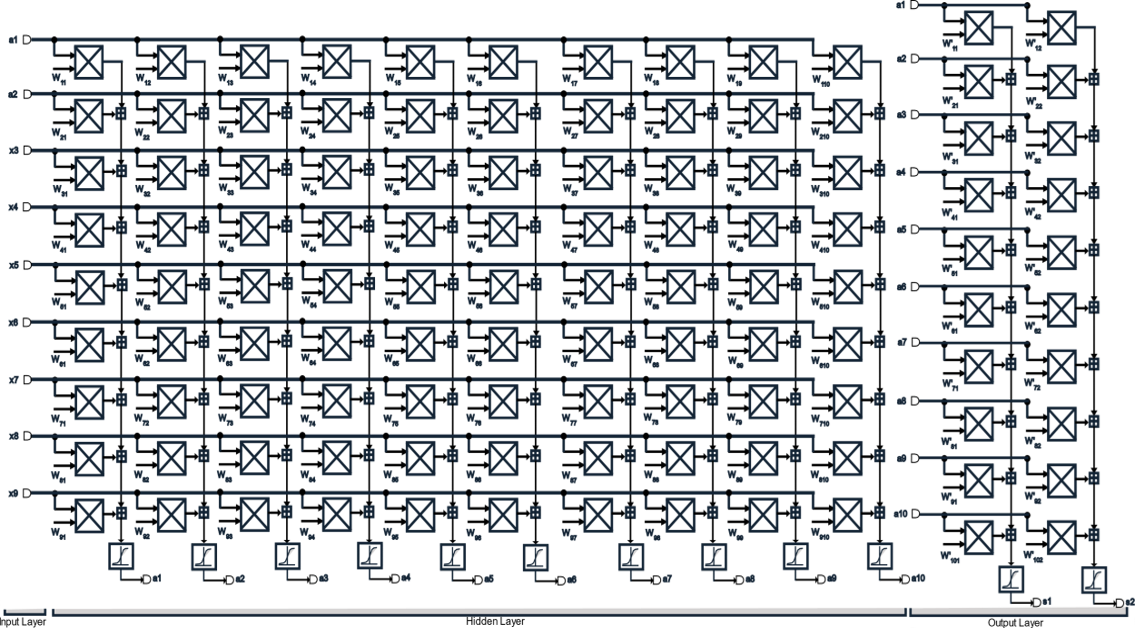
Figure 10: Implementation of the feed-forward multilayer perceptron analog artificial neural network [74].
Ultimately, Silas et al. [76] implemented a fully integrated MLP AANN depicted in Figure 11, which classifies breast tumor cells into benign or malignant categories. This research introduces a novel analog network algorithm along with essential analog circuit blocks, realized through 90 nm CMOS technology, specifically for breast cancer analysis. The model's reliability is supported by extensive evaluation metrics, achieving SE, SP, A, F, IoU, and MCC of 0.9668, 0.9869, 0.9800, 0.9708, 0.9433, and 0.9556, respectively. Additionally, Monte Carlo analysis corroborates an accuracy of 98.00% on the WBCD dataset, with a power consumption of 23.06 mW, utilizing 122 MB of memory while functioning at a power supply rail of ± 900 mV for each analog circuit component and a computational unit temperature of 27°C. These results indicate substantial potential for integrating the proposed model into clinical practice, thereby advancing the field of medical informatics and enhancing patient care in diagnostic processes.
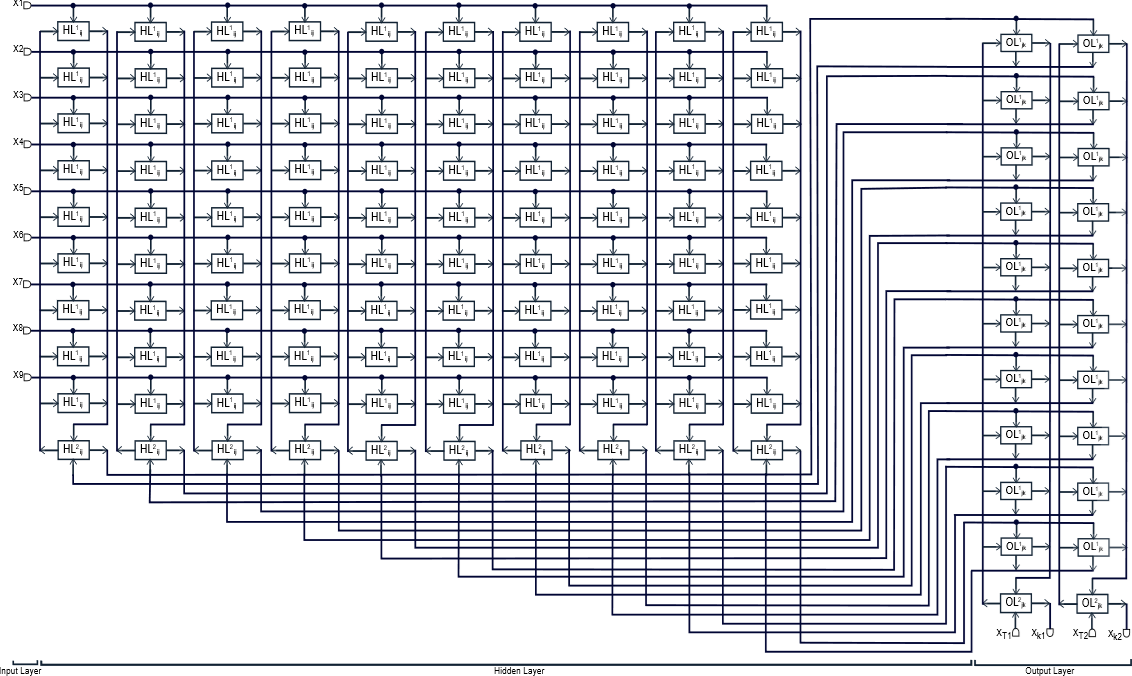
Figure 11: Implementation of the fully integrated multilayer perceptron analog artificial neural network with backpropagation [76].
Overall, the mentioned research works summarized in Table 5 highlight the potential of exploiting AANNs for breast cancer diagnosis tasks, offering low power and energy consumption, high speed, and compact size advantages compared to digital circuits. Another limitation stems from the precision constraints of analog circuitry. Notably, Silas et al. [76] stands out for attaining a 98.0% accuracy through on-chip learning when compared to other AANNs reported in the literature, such as Jayaraj et al. [85] achieving 82.00% accuracy, Gencer et al. [88] achieving 96.43% accuracy, Chandrasekaran et al. [86] achieving 96.59% accuracy, and Djimeli-Tsajio Alain et al. [74] achieving 96.85% accuracy, all with off-chip learning. Additionally, Silas et al. [76] demonstrates a reduced power consumption of 23.06 mW, in contrast to the 46.08 mW reported in [88], the 100.0 mW in [85], and the 31.95 mW in [74]. These techniques diverge from conventional digital hardware methodologies, facilitating progress in medical diagnostic processes with considerable implications for healthcare by addressing issues such as excessive power consumption, slow processing speeds, and the ability to capture complex non-linear input-output relationships for accurate modeling of intricate systems. Furthermore, Table 5 considers other aspects like the task, implementation method, learning approach, network architecture, and supply voltage. A key observation is that Silas et al. [76] exploits CMOS VLSI with on-chip learning compared to prior approaches, particularly those employing off-chip learning, including [74,85,86,88] or digital hardware implementation, including Jouni et al. [11] and Kaplan et al. [84]. This demonstrates the effectiveness of Silas et al. [76] architecture in optimizing both accuracy and energy efficiency, critical factors for practical MLP AANN deployment in medical applications. Moreover, it appears to be in line with Jouni et al. [11] and Djimeli-Tsajio Alain et al. [74] in terms of supply voltage and number of neurons, suggesting that the major advance has been in implementation efficiency. The advantage of Silas et al. [76] arises from its use of analog computing in medical diagnostics, showcasing a reduced inference time of 446.329 µs in contrast to 6845 µs in Jouni et al. [11].
The comparative analysis of AANN hardware implementations presented in Table 5 also reveals several key trends in the development of analog neural networks for breast cancer diagnosis. Most studies rely on CMOS technologies, ranging from 1.2 µm to 65 nm, with 90 nm CMOS appearing as the most commonly used technology node due to its balance between integration capability and power efficiency. This highlights the energy efficiency, real-time processing, and sophisticated pattern detection abilities of AANNs. In summary, AANNs are compact, portable, and self-sufficient IC chips of minimal dimensions, accompanied by a digital-to-analog converter. They are specifically engineered for medical environments to collect breast cancer data and provide precise diagnostics. Functioning as auxiliary diagnostic tools, they could assist clinicians and physicians in making faster, more informed decisions, thereby reducing the likelihood of misdiagnosis. However, the clinical applicability of these systems is not yet validated, as some works are experimental and primarily focus on proof-of-concept circuit demonstrations rather than direct medical classification tasks. Additionally, a common limitation across many designs is the reliance on off-chip learning due to the absence of non-volatile on-chip analog memory, which prevents the realization of fully integrated on-chip training in current AANN implementations.
Table 5: Analog hardware implementation comparative analysis.
| Ref. | Network Architecture | Hardware Technology | Classification Accuracy | Power Usage | Dataset / Validation | Clinical Applicability | Key Contribution | Main Limitations |
|---|---|---|---|---|---|---|---|---|
| [80] | 9-10-2 MLP architecture | Not specified (conceptual design) | Not reported | Not reported | Breast cancer classification | An architecture proposed as a baseline hardware ANN structure for breast cancer diagnosis. | Proposed a low-complexity ANN architecture to minimize classification error. | Focused mainly on architectural rather than full hardware implementation. |
| [9] | Signal generator for ANN IC testing | Microcontroller-based interface (PIC18F2680) | Not applicable | Not reported | Hardware validation tool | Designed to generate input/output signals for testing neural network ICs used in diagnosis systems. | Developed programmable signal generator for testing AANN ICs. | Not a classifier itself; only a supporting validation system. |
| [10] | Feed-forward MLP with backpropagation | Simulated architecture (future CMOS implementation) | Not reported | Not reported | Breast cancer classification simulations | Early design framework supporting future analog CMOS neural network implementations. | Designed multiplier, activation function, and derivative blocks for analog neural networks. | Only simulation validation; no physical hardware implementation. |
| [11] | MLP neural network | Simulated analog blocks (target: 90 nm CMOS) | Error rate 2.6% (~97.4% accuracy) | 50.00 mW | Breast cancer classification simulation | Demonstrates the feasibility of analog networks for cancer classification. | Evaluated the impact of analog non-idealities on classification performance. | Simulation-based validation; real-world hardware challenges not fully addressed. |
| [85] | AANN with common-source amplifier activation | CMOS transistor-level circuits | 82% accuracy | 100.0 mW | MNIST digit classification | Demonstrates analog functions; not designed for clinical use, limiting medical applicability. | Proposed energy-efficient analog activation function using a common-source amplifier. | Activation response differs from log-sigmoid; reduced learning capability. |
| [86] | 9-5-1 AANN architecture | 65 nm CMOS | 97% accuracy | 50 µW (160 fJ per classification) | Breast cancer dataset | High potential for low-power embedded diagnostic systems due to energy efficiency. | Fully integrated analog neural network prototype with hardware–software co-design. | No on-chip learning; requires off-chip training and lacks non-volatile memory. |
| [87] | 2-2-1 AANN architecture | 90 nm CMOS | 99.85% accuracy (XOR logic validation) | Not reported | XOR gate and full-adder demonstration | Limited clinical relevance since architecture demonstrates circuit functionality. | Demonstrated basic ANN hardware blocks with backpropagation-based weight optimization. | Architecture unsuitable for breast cancer classification tasks. |
| [88] | 5-3-1 AANN architecture | 1.2 µm CMOS IC | 96.43% accuracy | 46.08 mW | Breast cancer detection system | Demonstrates hardware ANN optimization, but with relatively high power consumption and non-standard architecture. | Analog optimization of N-dimensional objective functions using gradient descent. | Architecture unsuitable for breast cancer dataset structure; lacks on-chip analog memory. |
| [74] | 9-10-2 feed-forward MLP AANN architecture | 90 nm CMOS | 96.85% accuracy (MCC = 0.9309) | 31.95 µW | Wisconsin Breast Cancer Database | Strong clinical relevance due to high accuracy and very low power consumption. | Off-chip learning with on-chip inference using optimized analog building blocks. | Requires off-chip learning due to the absence of non-volatile analog storage. |
| [76] | 9-10-2 fully integrated MLP AANN | 90 nm CMOS | 98.00% accuracy | 23.06 mW | Wisconsin Breast Cancer Database | Demonstrates high diagnostic performance, indicating potential for clinical diagnostic use. | Introduced a novel analog network algorithm with extensive performance metrics. | High memory usage (122 MB) and needs clinical validation. |
The initial contrast between digital and analog hardware neural networks can be described as follows: in digital types, data are encoded as binary digits “0” or “1,” and processing uses digital circuits and logic gates. By contrast, the second type keeps data in analog form, continuous signals like voltages or currents, and computations occur through analog circuits with continuous mathematical functions. A second contrast highlights that digital hardware neural networks deliver high accuracy and adaptability. Yet they can be relatively slow, computationally heavy, and costly, especially with large datasets and intricate models, and they demand substantial data preprocessing, consuming considerable energy. Moreover, the sequential nature of most digital hardware implementations limits network parallelism, necessitating complex, energy-intensive processing units to boost speed. Analog hardware neural networks show promise for lower power use, higher speed, compactness, and parallel computation, along with easy integration. This parallelism enables analog realizations to conduct weighted sums and non-linear functions with much less power than digital ones. Additionally, analog circuits can operate at substantially higher speeds, a clear advantage for real-time tasks requiring quick decisions. However, analog hardware neural networks presently struggle with higher complexity and lower accuracy than their digital equivalents. They are also more susceptible to noise and non-idealities in implementation. Other approaches, while varied, may not be specifically tailored to breast cancer diagnosis or may lack the robustness of specialized methods. This work presents a strong alternative to digital hardware ANNs by leveraging analog circuits’ natural energy efficiency, speed, compactness, parallelism, and seamless integration, targeting breast cancer diagnosis and surpassing less focused methods.
Additionally, emerging neuromorphic technologies such as memristive devices and resistive crossbar arrays are also gaining attention in neuromorphic computing because they enable in-memory computation and highly parallel matrix operations. Early neuromorphic circuits used analog components and subthreshold transistors to mimic biological neurons for tasks such as pattern recognition and signal processing, but they faced limitations in scalability and precision [89]. Later developments introduced mixed-signal architectures that combine analog computation with digital control, such as crossbar arrays for efficient matrix–vector multiplication, improving speed and energy efficiency [90]. Additionally, memristor-based networks offer compact and low-power solutions through high-density weight storage [91]. While these approaches have mainly been applied to other applications, they provide important insights for developing analog hardware systems for breast cancer diagnosis. Neurons emulate biological activation functions through transistor-based nonlinear components, requiring careful design to balance nonlinearity, power efficiency, and process variations [92]. Synapses control signal strength between neurons; early designs used resistors and multipliers but faced scalability limitations [89]. More advanced implementations use Floating-Gate transistors for adjustable analog weight storage [93] and memristors for non-volatile memory [90]. The overall performance of MLP AANNs depends on optimizing these circuits while addressing issues such as noise, device mismatch, weight precision, and scalability. Moreover, other techniques have been used: Moges et al. [94] compares ANN and SVR models for predicting spray drift, contributing to environmental science research. Furthermore, Sedlakova et al. [95] contends that digital methods in medical diagnostics boost precision but add complexity and cost. Simultaneously, Ye et al. [96] created a method to inject noise into analog deep neural networks, delivering stable predictions despite parameter variations, which is crucial for safety-critical uses. Ben Ahmed et al. [97] likewise, a combined framework for early breast cancer detection via ultrasound segmentation was revealed, showing innovative diagnostic approaches. Finally, Gebregiorgis et al. [98] offers a survey of computation-in-memory architectures, discussing design and applications and achieving notable gains in efficiency and energy by reducing data movement.
The final dimension of the taxonomy addresses the deployment maturity of analog neural network systems. Research efforts in this field can generally be classified according to their stage of development. At the earliest stage, simulation-level studies focus on evaluating neural network performance using software simulations without considering hardware constraints [63]. The next stage involves behavioral modeling, where circuit-level behavior is approximated using high-level simulation tools to evaluate analog signal processing characteristics [64]. More advanced research includes transistor-level circuit design using electronic design automation tools such as Cadence, where detailed analog circuits implementing neural computations are simulated and optimized [74,76]. A smaller number of studies reports fabricated integrated circuits implementing neural networks using semiconductor manufacturing technologies. These fabricated prototypes demonstrate the practical feasibility of analog neural network hardware [40]. However, no system has progressed to the final stage of deployment in clinical diagnostic environments, highlighting the need for further research and development before AANN-based diagnostic systems can be widely adopted in healthcare applications.
Overall, the taxonomy proposed in this survey highlights several important trends in the development of analog neural networks for breast cancer diagnosis. First, most existing implementations rely on MLP architectures due to their relative simplicity and compatibility with analog hardware design. Second, off-chip learning remains the dominant training approach because implementing gradient-based learning directly in analog circuits remains technically challenging. Third, memory implementation continues to be a key challenge, particularly in achieving reliable and scalable analog storage of synaptic weights. Finally, the majority of AANN systems remain at the simulation or prototype stage, indicating that further research is required to translate these technologies into practical medical diagnostic devices. By organizing existing research within this structure, the proposed framework provides a comprehensive perspective on the design space of AANN systems and highlights potential directions for future research.
Breast Cancer Datasets
Several publicly available datasets are commonly used to evaluate machine learning algorithms for breast cancer diagnosis. These datasets vary in terms of data modality, size, and annotation quality. The WBCD is one of the most widely used datasets in machine learning research. It contains numerical features extracted from digitized images of breast mass cell nuclei. The dataset includes labeled examples of benign and malignant tumors and has been used extensively for evaluating classification algorithms. The MLP-AANN trained on the Wisconsin dataset encompasses a diverse demographic, including age, race, and genetic predispositions. The dataset comprises 699 tumor cases characterized in 11 attributes, including 9 input features and 2 output classes representing malignant (cancerous) and benign (non-cancerous) samples. The input features include the thickness of the cluster, cell size uniformity, uniformity of cell shape, marginal adhesion, single epithelial cell size, bare pits, bland chromatin, normal nucleolus, and mitoses. Studies have used the WBCD dataset to analog neural network learning models for breast cancer detection. For example, the hybrid learning ensemble method evaluated on the dataset achieved classification accuracies of 96.5% respectively [74]. More recent analog on-chip learning frameworks have reported even higher performance, 98.00% accuracy using a fully integrated MLP AANN model [76]. The developed analog models using this dataset effectively identify tumors at initial and advanced stages, accounting for imaging irregularities like motion blur, overlapping tissues, and high-density breast tissue. Furthermore, it is possible to validate analog models on this dataset for its generalizability, robustness, and bias mitigation capabilities.
The Breast Cancer Histopathological Image (BreaKHis) dataset is used for evaluating image-based breast cancer classification algorithms, particularly those based on deep learning and computer-aided diagnosis systems. It contains microscopic histopathology images of breast tumor tissue obtained through biopsy procedures. The dataset was collected from 82 patients and contains 7,909 RGB microscopic images, including 2,480 benign and 5,429 malignant tumor samples, each with a resolution of 700 × 460 pixels and stored as 8-bit RGB images [99]. A distinctive feature of the BreaKHis dataset is that the images are captured at four different magnification levels, 40×, 100×, 200×, and 400×, enabling multi-scale analysis of tissue morphology. Lower magnifications provide broader tissue architecture, while higher magnifications reveal detailed cellular and nuclear structures [100]. The dataset further categorizes tumors into eight histological subtypes, including four benign classes-adenosis, fibroadenoma, phyllodes tumor, and tubular adenoma and four malignant classes ductal carcinoma, lobular carcinoma, mucinous carcinoma, and papillary carcinoma [101]. This multi-class labeling enables both binary classification (benign vs. malignant) and multi-class tumor subtype classification, making it suitable for evaluating machine learning models in clinical decision support systems. Several studies have used the BreaKHis dataset to validate machine learning and deep learning models for breast cancer detection. For example, a hybrid deep-feature ensemble method evaluated on the dataset achieved classification accuracies of 96.82%, 95.84%, 97.01%, and 96.15% at magnifications of 40×, 100×, 200×, and 400×, respectively [102]. More recent deep learning frameworks have reported even higher performance; one model achieved 98.21% accuracy across magnification levels using advanced feature extraction and attention mechanisms [103]. These results demonstrate that the BreaKHis dataset is an important benchmark for validating histopathology-based AI diagnostic systems, enabling researchers to evaluate algorithm robustness across different magnification scales and tumor subtypes.
The INbreast dataset is a high-quality dataset for breast cancer research based on full-field digital mammography (FFDM) images with detailed annotations provided by expert radiologists. It contains 410 mammographic images collected from 115 clinical cases, including normal, benign, and malignant findings, with lesion types such as masses, calcifications, asymmetries, and architectural distortions precisely labeled. Each image is provided with a resolution of 3328 × 4084 pixels, ensuring spatial detail suitable for medical image analysis. In addition to image data, the dataset includes segmentation masks and clinical annotations, enabling tasks such as lesion detection, segmentation, and classification. Although smaller than many other mammography datasets, INbreast is widely used due to its high annotation quality and clinical reliability, making it valuable for validating computer-aided diagnosis systems and machine learning algorithms for breast cancer detection. Several studies have used the dataset to evaluate deep learning models, achieving high diagnostic performance and demonstrating their effectiveness for mammography-based breast cancer analysis [104,105].
A comparative analysis and quantitative synthesis of breast cancer datasets is presented in Table 6, integrating a structured comparison of both analytical and quantitative synthesis, combining dataset characteristics and reported performance metrics. The comparative analysis highlights key differences in dataset structure, modality, and suitability. The WBCD remains one of the most widely used benchmarks for evaluating classification in neural networks due to its structured tabular features and relatively small size. These characteristics make it particularly suitable for evaluating MLP architectures and AANNs implemented in hardware. In contrast, the BreaKHis dataset provides a significantly larger and more complex image-based dataset derived from histopathology microscopy, enabling evaluation of deep learning models across multiple magnification levels and tumor subtypes. Meanwhile, the INbreast dataset focuses on mammography imaging and provides high-quality radiologist annotations, making it particularly valuable for evaluating computer-aided diagnosis systems designed for clinical breast cancer screening. From a quantitative perspective, classification accuracies reported across these datasets typically range between 95% and 98%, depending on dataset characteristics and model architecture. While tabular datasets such as WBCD facilitate efficient hardware implementations of neural networks, image-based datasets such as BreaKHis and INbreast provide richer diagnostic information but require computationally intensive processing methods.
Table 6: Comparative analysis and quantitative synthesis of breast cancer datasets used in machine learning.
| Dataset Characteristics | WBCD Dataset | BreaKHis Dataset | INbreast Dataset |
|---|---|---|---|
| Data Modality | Tabular dataset derived from digitized FNA images | Histopathology microscopic images | Full-field digital mammography (FFDM) images |
| Patients / Cases | Not specified | 82 patients | 115 clinical cases |
| Number of Samples | 699 tumor samples | 7,909 images (2,480 benign, 5,429 malignant) | 410 mammographic images |
| Resolution / Features | 11 attributes (9 input features + 2 output classes) | 700 × 460 pixel RGB images | 3328 × 4084 pixel mammographic images |
| Input Features / Image Characteristics | Clump thickness, cell size uniformity, cell shape uniformity, marginal adhesion, epithelial cell size, bare nuclei, chromatin, nucleoli, mitoses | Multi-scale microscopy images captured at magnifications of 40×, 100×, 200×, and 400× | High-resolution mammography images with lesion segmentation masks |
| Classification Tasks | Binary classification (Benign vs Malignant) | Binary classification and multi-class tumor subtype classification (8 tumor types) | Multi-class classification (Normal, Benign, Malignant) and lesion detection |
| Annotation Type | Expert-labeled tumor classes | Histological subtype annotations | Radiologist annotations and segmentation masks |
| Machine Learning Approaches Used | Classical ML algorithms, multilayer perceptron (MLP), analog artificial neural networks | Deep learning models, convolutional neural networks, and computer-aided diagnosis systems | Deep learning mammography analysis models, lesion detection algorithms |
| Reported Performance | 96.5% accuracy using hybrid ensemble learning; 98.00% accuracy using analog MLP-AANN | 96.82%, 95.84%, 97.01%, 96.15% at 40×, 100×, 200×, 400× magnifications; up to 98.21% accuracy with advanced deep learning models | High diagnostic performance reported in mammography-based detection systems |
| Key Strengths | Structured numerical features suitable for analog neural hardware implementations | Multi-scale dataset enabling analysis of tissue morphology | High-quality radiologist annotations and clinically realistic mammography images |
| Limitations | Small dataset size and limited imaging information | High computational requirements and class imbalance | Relatively small dataset size compared to other imaging datasets |
| References | [74], [76] | [99], [100], [101], [102], [103] | [104], [105] |
Limitations and Challenges of Analog Neural Hardware
Analog neural networks face several technical challenges that must be addressed before they can be widely deployed in practical applications. One of the most significant challenges is sensitivity to noise. Analog neural hardware is inherently sensitive to electronic noise because computations are performed using continuous voltage or current signals. Thermal noise, flicker noise, and electromagnetic interference can introduce signal fluctuations that affect computational accuracy. In neural circuits, these disturbances may accumulate across multiple processing stages, potentially degrading classification performance. Therefore, robust circuit design techniques such as filtering and noise-resistant architectures are often required to maintain reliable operation. Furthermore, device mismatch is another important challenge caused by fabrication variations in semiconductor manufacturing. Small differences in transistor characteristics, such as threshold voltage and gain, can lead to inconsistencies between circuit components that are intended to operate identically. In analog neural networks, these variations may distort synaptic weights or neuron responses, affecting system accuracy. Calibration methods and adaptive learning mechanisms are commonly used to compensate for these variations.
Analog circuits are also susceptible to parameter drift over time due to environmental changes and device aging. Factors such as temperature variations and long-term transistor degradation can alter circuit parameters, leading to shifts in neural computation behavior. If not managed, these changes may reduce system reliability during prolonged operation. Compensation techniques such as temperature stabilization and periodic recalibration can help mitigate these effects. Moreover, scalability remains a major limitation for analog neural networks. Implementing large neural architectures requires extensive interconnections between neurons and synapses, which increases circuit complexity and chip area. As networks grow larger, issues such as routing congestion, parasitic effects, and signal degradation become more significant. Consequently, designing large-scale analog neural systems remains challenging, and hybrid analog–digital approaches are often explored to improve scalability. Reproducibility across fabrication processes is also a key challenge for AANNs. AANNs rely on precise voltage and current relationships; variations in semiconductor fabrication, such as changes in transistor threshold voltage or device dimensions, can cause differences in circuit behavior across chips. As a result, performance achieved in simulations or prototypes may not be consistently reproduced in other fabricated devices. Calibration techniques and robust circuit designs are therefore necessary to reduce the impact of process variability and maintain stable system performance.
Clinical Deployment and Regulatory Considerations
Although analog hardware demonstrates promising technical capabilities, it remains experimental, and its deployment in clinical settings requires careful consideration of regulatory and ethical requirements. Medical devices incorporating artificial intelligence must undergo rigorous validation to ensure safety, reliability, and clinical effectiveness before being adopted in healthcare environments. Regulatory authorities such as the World Health Organization, the United States Food and Drug Administration, and the European Medicines Agency require substantial evidence demonstrating that AI-based medical technologies perform consistently under real-world clinical conditions. This typically involves controlled clinical evaluations, regulatory approval processes, and ongoing monitoring to ensure continued safety and performance. In addition to regulatory approval, integrating AI diagnostic systems into healthcare infrastructure presents practical challenges. These systems must be compatible with hospital information systems and comply with strict data protection regulations governing patient medical records. Ensuring secure data handling and interoperability with existing clinical workflows is therefore essential for successful deployment.
Conclusion
Future research should focus on several areas that may help overcome the limitations of existing analog neural network implementations. Hybrid analog–digital architectures represent one promising direction, combining the energy efficiency of analog computation with the flexibility of digital control. Advances in semiconductor technologies may also enable more reliable implementations of analog neural circuits. Emerging devices such as memristors offer potential advantages for implementing synaptic weight storage and matrix operations. Another important research direction involves the development of standardized benchmarks and datasets for evaluating hardware neural networks in medical applications. Such benchmarks would enable more consistent comparisons between different systems in cross-validation strategies.
Analog artificial neural networks represent a promising approach for developing energy-efficient diagnostic systems capable of supporting medical decision-making in resource-constrained environments. By leveraging the physical properties of electronic circuits, analog neural hardware may enable real-time analysis of biomedical data within compact and portable devices. This survey has provided a comprehensive overview of research on analog neural networks relevant to breast cancer diagnosis. A structured taxonomy was introduced to organize the field, and comparative analysis highlighted key trends in hardware design. The survey also examined commonly used datasets, technical limitations, and clinical deployment considerations. While significant challenges remain, continued advances in neuromorphic hardware and interdisciplinary collaboration between engineers, computer scientists, and medical researchers may enable the development of practical analog neural diagnostic systems in the future.
Acknowledgments
No funding support was obtained.
Author Contributions
Koagne Longpa Tamo Silas: Investigation, Methodology, and Writing - original draft; Djimeli-Tsajio Alain Bernard: Conceptualization and Supervision; Fotsing Talla Bernard: Formal Analysis; Lienou Jean-Pierre: Visualization; Geh Wilson Ejuh: Project administration and Writing - review & editing of interest.
Conflict of Interest
All authors declare that they have no conflicts of interest.
Data Availability Statement
No primary data collection is applicable. The publicly available datasets referenced in this survey are cited appropriately.
Ethics Statement
No direct patient interaction or patient-identifiable data was involved in this survey. The researchers adhered to the highest standards of scientific integrity, responsible research conduct, and transparency in reporting.
References
- Macmillan Cancer Support. (2023). Breast cancer prevalence. In Wikipedia. Retrieved March 17, 2025. Google Scholar ↗
- Qamar R, Zardari BA. Artificial neural networks: An overview. Mesopotamian Journal of Computer Science. 2023:124-33. Google Scholar ↗
- Paulu F, Hospodka J. Design of fully analogue artificial neural network with learning based on backpropagation. Radioengineering. 2021;30(2):357-63. Google Scholar ↗
- Chiblé H, Jouni H. Analog multiplier for feed forward neural network signal processing. Synapse. 2010;11(M12). Google Scholar ↗
- Dias FM, Antunes A, Mota AM. Artificial neural networks: a review of commercial hardware. Eng Appl Artif Intell. 2004;17(8):945-52. Google Scholar ↗
- Rizwan M, Alharbi YR. Artificial intelligence-based approach for short-term load forecasting for selected feeders at madina saudi arabia. Int J Electr Electron Eng Telecommun. 2021;10(5):300-6. Google Scholar ↗
- Dua D, Graff C. UCI Machine Learning Repository. University of California, Irvine, School of Information and Computer Sciences. 2019. Google Scholar ↗
- Jouni H. Cellules analogiques CMOS pour réseaux de neurones. Application à la classification des cellules cancéreuses dans le sein [Doctoral dissertation]. COMUE Université Côte d’Azur; Lebanese International University; 2018. Google Scholar ↗
- Jouni H, Harb A, Jacquemod G, Leduc Y. Programmable signal generator for neural network application. In: Proc 29th Int Conf Microelectron (ICM). 2017:1-4. Google Scholar ↗
- Jouni H, Harb A, Jacquemod G, Leduc Y. Creation of real blocks for neural network using simulink. In: Proc Int Conf Comput Appl (ICCA). 2018:1-214. Google Scholar ↗
- Jouni H, Harb A, Jacquemod G, Leduc Y. Design and specification of analog artificial neural network. SN Appl Sci. 2019;1(11):1-15. Google Scholar ↗
- Jia Z, Kim B. Online trained neural network-PI speed controller for DTC based IPMSM drives. Int J Electr Electron Eng Telecommun. 2018;7(3):108-13. Google Scholar ↗
- Liu F, Zheng H, Ma S, Zhang W, Liu X, Chua Y, et al. Advancing brain-inspired computing with hybrid neural networks. Natl Sci Rev. 2024;11(5):nwae066. Google Scholar ↗
- Moralis-Pegios M, Mourgias-Alexandris G, Tsakyridis A, Giamougiannis G, Totovic A, Dabos G, et al. Neuromorphic silicon photonics and hardware-aware deep learning for high-speed inference. J Lightwave Technol. 2022;40(10):3243-54. Google Scholar ↗
- Ahmed RU, Thakur HR, Seenivasan MA, Saha P. Power-efficient VLSI realization of decimal convolution algorithms for resource-constrained environments: a design perspective in CMOS and double-gate CMOS technology. Microsyst Technol. 2024:1-13. Google Scholar ↗
- Bruno U, Mariano A, Rana D, Gemmeke T, Musall S, Santoro F. From neuromorphic to neurohybrid: transition from the emulation to the integration of neuronal networks. Neuromorphic Comput Eng. 2023;3(2):023002. Google Scholar ↗
- Bian J, Liu Z, Tao Y, Wang Z, Zhao X, Lin Y, et al. Advances in memristor-based artificial neuron fabrication-materials, models, and applications. Int J Extrem Manuf. 2023;6(1):012002. Google Scholar ↗
- Van Helleputte N, Mora-Lopez C, Van Hoof C. Design of CMOS circuits for electrophysiology. IEICE Trans Electron. 2023;106(10):506-15. Google Scholar ↗
- Houshmand P, Sarda GM, Jain V, Ueyoshi K, Papistas IA, Shi M, et al. Diana: an end-to-end hybrid digital and analog neural network SoC for the edge. IEEE J Solid-State Circuits. 2022;58(1):203-15. Google Scholar ↗
- Malhotra A, Singh A. Implementation of AI in the field of VLSI: a review. In: Proc 2nd Int Conf Power Control Comput Technol (ICPC2T). IEEE; 2022:1-5. Google Scholar ↗
- Alam M, Yakopcic C, Taha TM. On-chip optimization and deep reinforcement learning in memristor based computing. In: Proc 18th ACM Int Symp Nanoscale Archit. 2023:1-7. Google Scholar ↗
- Sung H, Ferlay J, Siegel RL, Laversanne M, Soerjomataram I, Jemal A, et al. Global cancer statistics 2020: GLOBOCAN estimates of incidence and mortality worldwide for 36 cancers in 185 countries. CA Cancer J Clin. 2021;71(3):209-49. Google Scholar ↗
- National Cancer Institute, NCI. Breast cancer: breast cancer basics and you. NIH MedlinePlus. 2014. Google Scholar ↗
- World Health Organization. Breast cancer. WHO Newsroom. 2023. Google Scholar ↗
- Wilkinson L, Gathani T. Understanding breast cancer as a global health concern. Br J Radiol. 2022;95(1130):20211033. Google Scholar ↗
- Kowal M, Filipczuk P, Obuchowicz A, Korbicz J, Monczak R. Computer-aided diagnosis of breast cancer based on fine needle biopsy microscopic images. Comput Biol Med. 2013;43(10):1563-72. Google Scholar ↗
- Miller J. 99 percent survival rate when breast cancer is caught early. U.S. Department of Health and Human Services, Office on Women’s Health. 2022. Google Scholar ↗
- Ngan TT, Nguyen NT, Van Minh H, Donnelly M, O’Neill C. Effectiveness of clinical breast examination as a ‘stand-alone’ screening modality: an overview of systematic reviews. BMC Cancer. 2020;20:1-10. Google Scholar ↗
- Hooshmand S, Reed WM, Suleiman MAE, Brennan PC. Screening mammography: diagnostic efficacy—issues and considerations for the 2020s. Radiat Prot Dosimetry. 2021;197(1):54-62. Google Scholar ↗
- Canelo-Aybar C, Ferreira DS, Ballesteros M, Posso M, Montero N, Solà I, et al. Benefits and harms of breast cancer mammography screening for women at average risk of breast cancer: a systematic review for the European Commission Initiative on Breast Cancer. J Med Screen. 2021;28(4):389-404. Google Scholar ↗
- Iacob R, Iacob ER, Stoicescu ER, Ghenciu DM, Cocolea DM, Constantinescu A, et al. Evaluating the role of breast ultrasound in early detection of breast cancer in low- and middle-income countries: a comprehensive narrative review. Bioengineering. 2024;11(3):262. Google Scholar ↗
- Guo R, Lu G, Qin B, Fei B. Ultrasound imaging technologies for breast cancer detection and management: a review. Ultrasound Med Biol. 2018;44(1):37-70. Google Scholar ↗
- Rahmat K, Mumin NA, Hamid MT, Hamid SA, Ng WL. MRI breast: current imaging trends, clinical applications, and future research directions. Curr Med Imaging. 2022;18(13):1347-61. Google Scholar ↗
- Kotian D, Bhat VS, Poojary D, Kavya V. Artificial neural networks applied in the detection of breast cancer. In: Proc Int Conf Intell Syst Comput Commun. Springer; 2023:207-20. Google Scholar ↗
- Movahed TM, Bidgoly HJ, Manesh MHK, Mirzaei HR. Predicting cancer cells progression via entropy generation based on AR and ARMA models. Int Commun Heat Mass Transf. 2021;127:105565. Google Scholar ↗
- Jannat HE, Saleh AF, Hossain SA, Das SR, Hossain T. Role of nuclear morphometry in the cytologic evaluation of benign and malignant breast lesions. Mymensingh Med J. 2022;31(3):634-41. Google Scholar ↗
- Rakha EA, Chmielik E, Schmitt FC, Tan PH, Quinn CM, Gallagy G. Assessment of predictive biomarkers in breast cancer: challenges and updates. Pathobiology. 2022;89(5):263-77. Google Scholar ↗
- Smith RA, Andrews KS, Brooks D, Fedewa SA, Manassaram-Baptiste D, Saslow D, et al. Cancer screening in the United States, 2019: a review of current American Cancer Society guidelines and current issues in cancer screening. CA Cancer J Clin. 2019;69(3):184-210. Google Scholar ↗
- Miranda GHB, Felipe JC. Computer-aided diagnosis system based on fuzzy logic for breast cancer categorization. Comput Biol Med. 2015;64:334-46. Google Scholar ↗
- Chaieb M, Azzouz M, Refifa MB, Fraj M. Deep learning-driven prediction in healthcare systems: applying advanced CNNs for enhanced breast cancer detection. Comput Biol Med. 2025;189:109858. Google Scholar ↗
- Patil D, Rane NL, Desai P, Rane J. Machine learning and deep learning: methods, techniques, applications, challenges, and future research opportunities. Trustworthy Artif Intell Ind Soc. 2024:28-81. Google Scholar ↗
- Talaei Khoei T, Ould Slimane H, Kaabouch N. Deep learning: systematic review, models, challenges, and research directions. Neural Comput Appl. 2023;35(31):23103-24. Google Scholar ↗
- Cervantes J, Garcia-Lamont F, Rodríguez-Mazahua L, Lopez A. A comprehensive survey on support vector machine classification: applications, challenges and trends. Neurocomputing. 2020;408:189-215. Google Scholar ↗
- Guido R, Ferrisi S, Lofaro D, Conforti D. An overview on the advancements of support vector machine models in healthcare applications: a review. Information. 2024;15(4):235. Google Scholar ↗
- Gurney K. An introduction to neural networks. CRC Press; 2018. Google Scholar ↗
- Bharadiya J. Convolutional neural networks for image classification. Int J Innov Sci Res Technol. 2023;8(5):673-7. Google Scholar ↗
- Bai V. Breast cancer recurrence prediction with deep neural network and feature optimization. Autom J Control Meas Electron Comput Commun. 2024;65(1). Google Scholar ↗
- Inan MSK, Hossain S, Uddin MN. Data augmentation guided breast cancer diagnosis and prognosis using an integrated deep-generative framework based on breast tumor’s morphological information. Inform Med Unlocked. 2023;37:101171. Google Scholar ↗
- Zhang L, Cui H, Liu B, Zhang C, Horn BKP. Backpropagation neural network for processing of missing data in breast cancer detection. IRBM. 2021;42(6):435-41. Google Scholar ↗
- Rehman M, Shafi I, Ahmad J, Garcia CO, Barrera AEP, Ashraf I. Advancement in medical report generation: current practices, challenges, and future directions. Med Biol Eng Comput. 2024:1-22. Google Scholar ↗
- Kumar A, Beeraka SM, Singh J, Gupta B. An on-chip trainable and scalable in-memory ANN architecture for AI/ML applications. Circuits Syst Signal Process. 2023;42(5):2828-51. Google Scholar ↗
- Srinivasan V, Graham DW, Hasler P. Floating-gates transistors for precision analog circuit design: an overview. In: Proc 48th Midwest Symp Circuits Syst. IEEE; 2005:71-4. Google Scholar ↗
- Zhang B, Saikia J, Meng J, Wang D, Kwon S, Myung S, et al. MACC-SRAM: a multistep accumulation capacitor-coupling in-memory computing SRAM macro for deep convolutional neural networks. IEEE J Solid-State Circuits. 2023;59(6):1938-49. Google Scholar ↗
- Pechmann S, Mai T, Potschka J, Reiser D, Reichel P, Breiling M, et al. A low-power RRAM memory block for embedded, multi-level weight and bias storage in artificial neural networks. Micromachines. 2021;12(11):1277. Google Scholar ↗
- Huang Y, Kiani F, Ye F, Xia Q. From memristive devices to neuromorphic systems. Appl Phys Lett. 2023;122(11). Google Scholar ↗
- Castriotta M, Prati E, Ferrari G. Cryogenic characterization and modeling of a CMOS floating-gate device for quantum control hardware. Solid-State Electron. 2022;189:108190. Google Scholar ↗
- Haensch W, Raghunathan A, Roy K, Chakrabarti B, Phatak CM, Wang C, et al. Compute in-memory with non-volatile elements for neural networks: a review from a co-design perspective. Adv Mater. 2023;35(37):2204944. Google Scholar ↗
- Aguirre F, Sebastian A, Le Gallo M, Song W, Wang T, Yang JJ, et al. Hardware implementation of memristor-based artificial neural networks. Nat Commun. 2024;15(1):1974. Google Scholar ↗
- Chen Z, Li X, Zhu X, Liu H, Tong H, Miao X. Full-analog implementation of activation function based on phase-change memory for artificial neural networks. IEEE Trans Ind Electron. 2023;71(8):9914-22. Google Scholar ↗
- Won UY, An Vu Q, Park SB, Park MH, Dam Do V, Park HJ, et al. Multi-neuron connection using multi-terminal floating-gate memristor for unsupervised learning. Nat Commun. 2023;14(1):3070. Google Scholar ↗
- Winterfeld H, Kohlstedt H, Ziegler M. MemFlash—floating gate transistors as memristors. In: Bio-Inspired Information Pathways: From Neuroscience to Neurotronics. Springer; 2023:115-28. Google Scholar ↗
- Han R, Huang P, Xiang Y, Hu H, Lin S, Dong P, et al. Floating gate transistor-based accurate digital in-memory computing for deep neural networks. Adv Intell Syst. 2022;4(12):2200127. Google Scholar ↗
- Naqi M, Kang MS, Liu N, Kim T, Baek S, Bala A, et al. Multilevel artificial electronic synaptic device of direct grown robust MoS2 based memristor array for in-memory deep neural network. npj 2D Mater Appl. 2022;6(1):53. Google Scholar ↗
- Xu Z, Tang B, Zhang X, Leong JF, Pan J, Hooda S, et al. Reconfigurable nonlinear photonic activation function for photonic neural network based on non-volatile opto-resistive RAM switch. Light Sci Appl. 2022;11(1):288. Google Scholar ↗
- Paliy M, Rizzo T, Ruiu P, Strangio S, Iannaccone G. Single-poly floating-gate memory cell options for analog neural networks. Solid-State Electron. 2021;185:108062. Google Scholar ↗
- Silas KLT, Bernard DA, Bernard FT, Jean-Pierre L, Ejuh GW. A high-resolution non-volatile floating gate transistor memory cell for on-chip learning in analog artificial neural networks. J Electr Electron Eng. 2025;13(1):82-91. Google Scholar ↗
- Pazos S, Zhu K, Villena MA, Alharbi O, Zheng W, Shen Y, et al. Synaptic and neural behaviours in a standard silicon transistor. Nature. 2025;640:69-76. Google Scholar ↗
- Misra J, Saha I. Artificial neural networks in hardware: a survey of two decades of progress. Neurocomputing. 2010;74(1-3):239-55. Google Scholar ↗
- Kurrey P, Kavishwar M, Zele R. Analog/mixed-signal classification for voice activity detection. In: Proc 29th IEEE Int Conf Electron Circuits Syst (ICECS). IEEE; 2022:1-4. Google Scholar ↗
- Fernández-Berni J, Carmona-Galán R. Accurate design of a MOS-based resistive network for time-controlled diffusion filtering. In: Proc Eur Conf Circuit Theory Des (ECCTD). IEEE; 2009:683-6. Google Scholar ↗
- Zhang Q, Wu H, Yao P, Zhang W, Gao B, Deng N, et al. Sign backpropagation: an on-chip learning algorithm for analog RRAM neuromorphic computing systems. Neural Netw. 2018;108:217-23. Google Scholar ↗
- Mohamed AR, Qi L, Wang G. A power-efficient and re-configurable analog artificial neural network classifier. Microelectron J. 2021;111:105022. Google Scholar ↗
- Xiao TP, Bennett CH, Feinberg B, Agarwal S, Marinella MJ. Analog architectures for neural network acceleration based on non-volatile memory. Appl Phys Rev. 2020;7(3). Google Scholar ↗
- Djimeli-Tsajio Alain B, Silas KLT, Jean-Pierre LT, Thierry N, Ejuh GW. Breast cancer diagnosis with machine learning using feed-forward multilayer perceptron analog artificial neural network. Int J Electr Electron Eng Telecommun. 2024;13(6):427-41. Google Scholar ↗
- Valle M. Analog VLSI implementation of artificial neural networks with supervised on-chip learning. Analog Integr Circuits Signal Process. 2002;33:263-87. Google Scholar ↗
- Silas KLT, Alain BDT, Thierry N, Jean-Pierre LT, Ejuh GW. Breast cancer detection and classification: a study on the specification and implementation of multilayer perceptron analog artificial neural networks. Comput Biol Med. 2025;190:110060. Google Scholar ↗
- Esteva A, Kuprel B, Novoa RA, Ko J, Swetter SM, Blau HM, et al. Dermatologist-level classification of skin cancer with deep neural networks. Nature. 2017;542(7639):115-8. Google Scholar ↗
- Wang J, Chen Y. Pre-training and fine-tuning. In: Introduction to Transfer Learning: Algorithms and Practice. Springer Nature Singapore; 2022:125-40. Google Scholar ↗
- Sajjadnia Z, Khayami R, Moosavi MR. Preprocessing breast cancer data to improve the data quality, diagnosis procedure, and medical care services. Cancer Inform. 2020;19:1176935120917955. Google Scholar ↗
- Jouni H, Issa M, Harb A, Jacquemod G, Leduc Y. Neural network architecture for breast cancer detection and classification. In: Proc IEEE Int Multidiscip Conf Eng Technol (IMCET). 2016:37-41. Google Scholar ↗
- Freeman K, Geppert J, Stinton C, Todkill D, Johnson S, Clarke A, et al. Use of artificial intelligence for image analysis in breast cancer screening programmes: systematic review of test accuracy. BMJ. 2021;374:n1872. Google Scholar ↗
- Mina R, Jabbour C, Sakr GE. A review of machine learning techniques in analog integrated circuit design automation. Electronics. 2022;11(3):435. Google Scholar ↗
- Houssein EH, Emam MM, Ali AA. An optimized deep learning architecture for breast cancer diagnosis based on improved marine predator’s algorithm. Neural Comput Appl. 2022;34(20):18015-33. Google Scholar ↗
- Kaplan E, Chan WY, Dogan S, Barua PD, Bulut HT, Tuncer T, et al. Automated BI-RADS classification of lesions using pyramid triple deep feature generator technique on breast ultrasound images. Med Eng Phys. 2022;108:103895. Google Scholar ↗
- Jayaraj A, Banerjee I, Sanyal A. Common-source amplifier based analog artificial neural network classifier. In: Proc IEEE Int Symp Circuits Syst (ISCAS). 2019:1-5. Google Scholar ↗
- Chandrasekaran ST, Hua R, Banerjee I, Sanyal A. A fully-integrated analog machine learning classifier for breast cancer classification. Electronics. 2020;9(3):515. Google Scholar ↗
- Medina-Santiago A, Hernandez-Gracidas CA, Morales-Rosales LA, Algredo-Badillo I, García M, Orozco Torres JA. CMOS implementation of ANNs based on analog optimization of n-dimensional objective functions. Sensors. 2021;21(21):7071. Google Scholar ↗
- Gencer FB, Xhafa X, İnam BB, Yelten MB. Design and validation of an artificial neural network based on analog circuits. Analog Integr Circuits Signal Process. 2021;106:475-83. Google Scholar ↗
- Ajayan J, Nirmal D, Jayaraj BK IV, Sreejith S. Advances in neuromorphic devices for the hardware implementation of neuromorphic computing systems for future artificial intelligence applications: a critical review. Microelectron J. 2022;130:105634. Google Scholar ↗
- Kiani F, Yin J, Wang Z, Yang JJ, Xia Q. A fully hardware-based memristive multilayer neural network. Sci Adv. 2021;7(48):eabj4801. Google Scholar ↗
- Xu W, Wang J, Yan X. Advances in memristor-based neural networks. Front Nanotechnol. 2021;3:645995. Google Scholar ↗
- Huang Y, Yang Z, Zhu J, Ye TT. Analog circuit implementation of neurons with multiply-accumulate and ReLU functions. In: Proc Great Lakes Symp VLSI. 2020:493-8. Google Scholar ↗
- Peng SY, Shih HY, Nath B. A reconfigurable floating-gate-transistor-capacitor filter for analog signal processing. Microelectron J. 2023;141:105944. Google Scholar ↗
- Moges G, McDonnell K, Delele MA, Ali AN, Fanta SW. Development and comparative analysis of ANN and SVR-based models with conventional regression models for predicting spray drift. Environ Sci Pollut Res. 2023;30(8):21927-44. Google Scholar ↗
- Sedlakova J, Westermair AL, Biller-Andorno N, Meier CA, Trachsel M. Comparison of analog and digital patient decision aids for the treatment of depression: A scoping review. Front Digit Health. 2023;5:1208889. Google Scholar ↗
- Ye N, Cao L, Yang L, Zhang Z, Fang Z, Gu Q, et al. Improving the robustness of analog deep neural networks through a Bayes-optimized noise injection approach. Commun Eng. 2023;2(1):25. Google Scholar ↗
- Ben Ahmed I, Ouarda W, Ben Amar C. Hybrid UNET model segmentation for an early breast cancer detection using ultrasound images. In: Proc Int Conf Comput Collect Intell. Springer; 2022:464-76. Google Scholar ↗
- Gebregiorgis A, Nguyen HAD, Taouil M, Bishnoi R, Catthoor F, Hamdioui S. An overview of computation-in-memory (CIM) architectures. In: Design and Applications of Emerging Computer Systems. Springer; 2023:31-65. Google Scholar ↗
- Wang G, Jia M, Zhou Q, Xu S, Zhao Y, Wang Q, et al. Multi-classification of breast cancer pathology images based on a two-stage hybrid network. J Cancer Res Clin Oncol. 2024;150(12):505. Google Scholar ↗
- Thatha VN, Karthik MG, Gaddam VG, Krishna DP, Venkataramana S, Lella KK, et al. Histopathological image based breast cancer diagnosis using deep learning and bio inspired optimization. Sci Rep. 2025;15(1):19034. Google Scholar ↗
- Han Z, Wei B, Zheng Y, Yin Y, Li K, Li S. Breast cancer multi-classification from histopathological images with structured deep learning model. Sci Rep. 2017;7(1):4172. Google Scholar ↗
- Abbasniya MR, Sheikholeslamzadeh SA, Nasiri H, Emami S. Classification of breast tumors based on histopathology images using deep features and ensemble of gradient boosting methods. Comput Electr Eng. 2022;103:108382. Google Scholar ↗
- Zhou Y, Jin F, Suo G, Yang J. ResViT-GANNet: a deep learning framework for classifying breast cancer histopathology images using multimodal attention and GAN-based augmentation. BMC Med Imaging. 2025;25(1):401. Google Scholar ↗
- Moreira IC, Amaral I, Domingues I, Cardoso A, Cardoso MJ, Cardoso JS. INbreast: toward a full-field digital mammographic database. Acad Radiol. 2012;19(2):236-48. Google Scholar ↗
- Carneiro G, Nascimento JC, Bradley AP. Automated analysis of unregistered multi-view mammograms with deep learning. IEEE Trans Med Imaging. 2015;34(11):2355-67. Google Scholar ↗